






































Automotive and Transportation
Digital solutions for dealerships, logistics, mobility, and transportation businesses.
Is your current CMS limiting your website, ecommerce capabilities, integrations, SEO, or ability to scale? We migrate businesses from outdated or restrictive platforms to Shopify, WooCommerce, WordPress, Magento, and custom solutions without disrupting the business.
Contact Us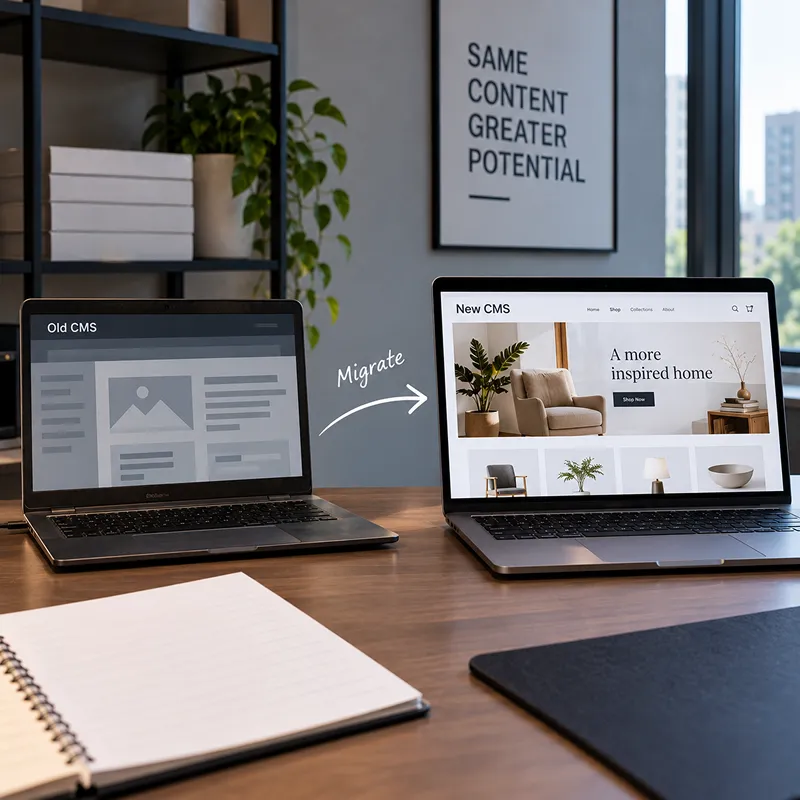
We help businesses migrate from outdated, restrictive, or unsuitable CMS platforms to modern solutions including Shopify, WooCommerce, WordPress, Magento, and custom applications. The same signals apply to any business whose current platform is limiting growth, regardless of industry.
Our CMS migration practice covers website and ecommerce data migration, platform replatforming evaluation, migration combined with UX redesign, legacy system modernization, headless and API-driven architecture, and the integration development that connects a new platform to the ERP, CRM, and marketing systems a business already runs.
We work with ecommerce brands migrating from restrictive website builders to Shopify or WooCommerce, jewelry retailers needing diamond inventory and configurator support during migration, and manufacturing and B2B companies moving from legacy systems to platforms that support dealer portals and ERP integration.
Every migration begins with a platform and website assessment: current CMS limitations, content and functionality inventory, and business requirements, because the right destination platform depends on what is actually constraining the business, not a default recommendation.
From content and product data migration with full SEO preservation to headless commerce architecture for businesses outgrowing every standard platform, we manage the migration from planning through launch and post-migration support.
Since 2007, Keyideas has delivered CMS migrations to Shopify, WooCommerce, WordPress, and custom platforms for ecommerce and B2B clients across the United States, United Kingdom, and Australia.
Keyideas has delivered CMS migrations to Shopify, WooCommerce, and WordPress for jewelry, manufacturing, and apparel clients.
Keyideas has built websites, platforms, and software products across more than 20 industry verticals over 18 years. We bring direct project experience to each industry we serve, not a generalist template applied to every client brief. Select an industry below to see what we have built in your market.

Healthcare websites, patient portals, appointment booking, and telemedicine solutions.

Websites for home improvement, maintenance, renovation, and repair services.
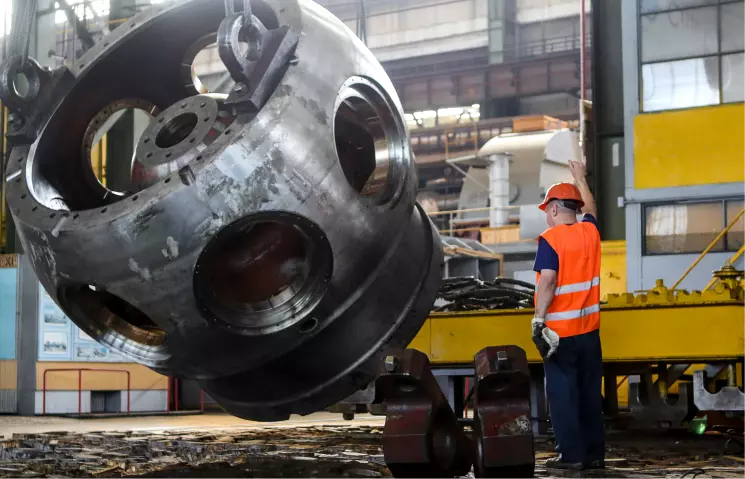
Custom software and websites for manufacturing and industrial businesses.
We select technologies and implementation approaches based on storefront complexity, performance requirements, integrations, customization needs, scalability, and long-term maintenance.
We Build On
We Migrate From
From website and ecommerce CMS migration to platform replatforming, legacy CMS modernization, headless architecture, API integrations, SEO migration, and performance optimization, we build migration solutions around your existing technology, business requirements, content structure, and long-term growth goals.
We move existing websites to a modern CMS while preserving content, structure, functionality, and search visibility, covering common paths including Wix to WordPress, Wix to Shopify, WordPress to WooCommerce, Drupal to WordPress, and custom CMS to Shopify or WooCommerce. Each source platform carries different data structures and export limitations, and we plan the migration around the specific technical constraints of the platform being left rather than a generic migration checklist.
We migrate ecommerce stores to a platform that can better support products, customers, orders, integrations, and future growth, transferring products and product attributes, categories and collections, customers, orders, images and media, reviews, content and blog posts, and URLs and metadata. Every category of migrated data is validated against the source platform before it is committed to the destination, because an ecommerce migration that loses reviews or order history damages customer trust.
When an existing platform is no longer suitable, we help evaluate requirements and move to a platform better aligned with the business, whether that destination is Shopify, WooCommerce, Magento or Adobe Commerce, WordPress, a custom Laravel application, or a headless commerce architecture. The evaluation is based on the specific limitation driving the replatforming decision, ecommerce capability, content flexibility, integration depth, or custom workflow needs, rather than defaulting to whichever platform is currently most discussed.
A CMS migration is often the right opportunity to overhaul an outdated website at the same time, and we combine migration with UX and UI redesign, mobile-first development, conversion optimization, website restructuring, improved navigation, advanced search and filtering, and custom functionality. Doing both together is more efficient than sequential projects months apart, because the same content, templates, and testing effort serve both the platform change and the design improvement.
Older CMS platforms can become difficult to maintain, integrate, and secure, and we help businesses modernize legacy systems and move toward scalable architectures. This includes legacy CMS migration, custom application modernization, API development, third-party integrations, cloud migration, database migration, and new frontend development, addressing the accumulated technical debt of a platform that was appropriate a decade ago but has become a genuine operational liability today.
Businesses are increasingly separating their content and commerce backend from the frontend to create more flexible digital experiences that a monolithic CMS cannot deliver. We build headless architectures where the CMS or commerce platform manages data and business logic while a custom frontend, often React or Next.js, delivers the actual user experience, giving businesses design freedom and performance characteristics that a traditional, tightly coupled CMS cannot match.
Businesses are looking for CMS architectures that can integrate AI-powered search, personalization, content generation, and customer experiences rather than platforms that require bolting AI on as an afterthought. We choose and configure migration destinations with this in mind, verifying that the platform’s API and data model actually support the AI-powered search, personalized product recommendations, and content generation tools the business plans to add, rather than discovering the limitation after the migration is already complete.
Modern CMS platforms increasingly need to deliver content and product information across websites, mobile applications, marketplaces, and other digital channels rather than serving a single website in isolation. We architect the migrated platform’s content and product data model to serve as a single source of truth that can feed multiple channels, avoiding the duplicate data entry and inconsistency that occurs when a business manages the same product information separately across several disconnected systems.
APIs are becoming a critical part of modern CMS architecture, connecting websites with ERP, CRM, PIM, inventory, payment, and marketing systems that a legacy or restrictive platform’s closed ecosystem could not support. We treat this integration architecture as a core part of the migration itself, not a phase two project addressed after launch, because a migration that reproduces the previous platform’s integration limitations has not actually solved the problem that justified the migration.
Businesses are using migration projects to improve website performance, mobile experiences, Core Web Vitals, and conversion rates, treating the platform change as the opportunity to fix performance problems that have accumulated for years rather than simply moving the same performance issues to new infrastructure. We benchmark the current site’s performance before migration and verify the new platform meets defined Core Web Vitals and conversion targets before considering the project complete.
Every CMS migration follows the same disciplined process regardless of source or destination platform: a platform and website assessment reviewing current architecture and requirements, a migration strategy identifying the destination and a plan covering data, functionality, and SEO, data migration with integrity validation, redesign and development where required, integration development reconnecting business systems, SEO migration with full redirect mapping, comprehensive testing before launch, and post-migration support to resolve issues after go-live.
We use industry-leading tools to ensure smooth communication, efficient development and transparent project management
Plan tasks, timelines, and project resources efficiently.
Build scalable solutions with clean and secure code.
Monitor performance, fix issues, and manage updates.
Create wireframes, UI designs, and interactive prototypes.

Conduct meetings and discussions to stay aligned.
Questions from business owners considering a CMS migration or replatforming project with Keyideas.
Have a question or need support? Our team is here to help and will get back to you within one business day.
* indicates required fields