Kentico eCommerce Serving Business and Consumer Kitchen Equipment Buyers
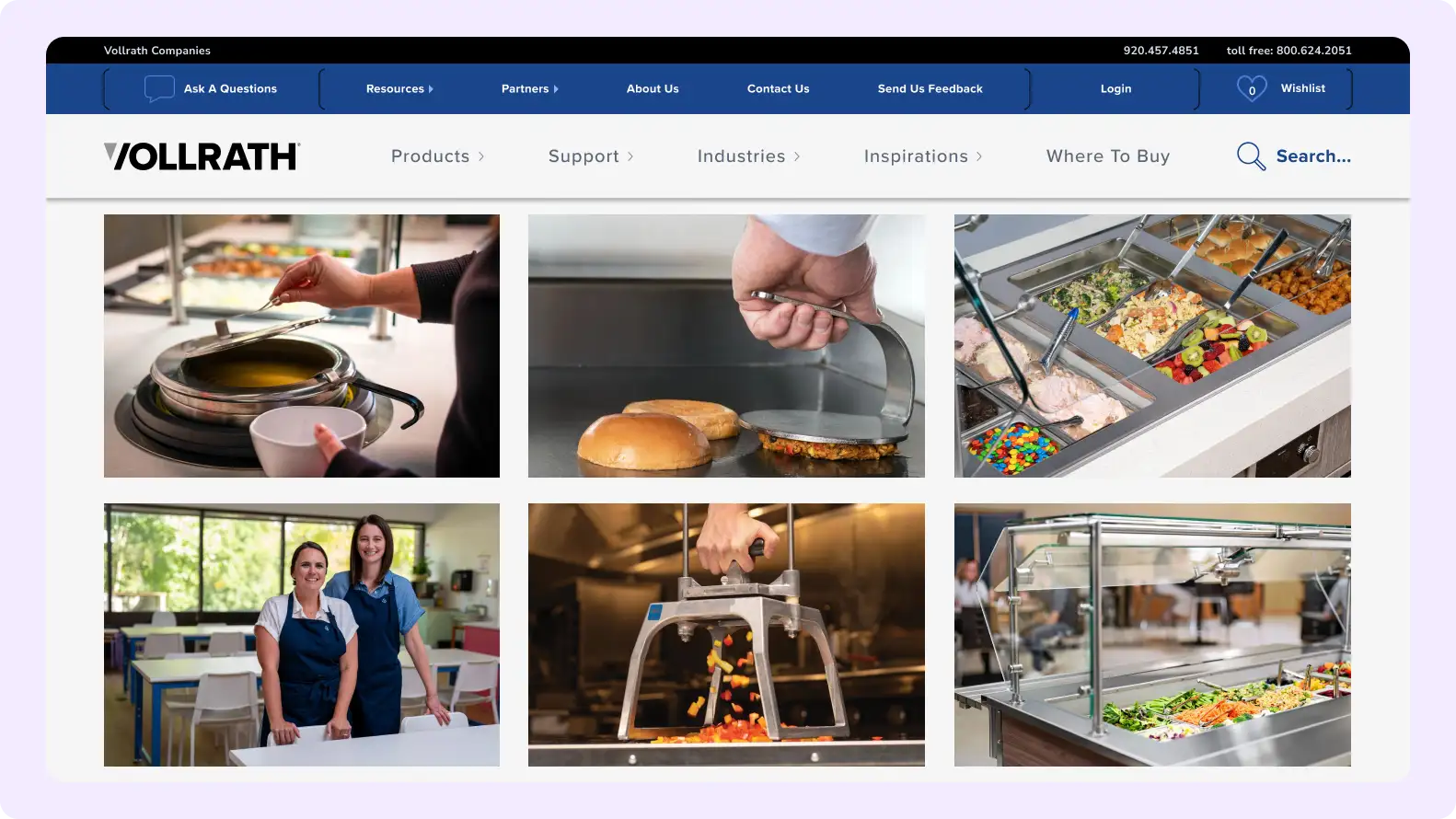
If you make commercial kitchen equipment, your customers range from a restaurant owner buying a single pan to a distributor ordering pallets for dozens of locations. Few websites serve both well. Individual buyers want clear photos and a quick checkout, while professional purchasers want volume pricing, formal quotes, and account tools. Trying to treat them identically leaves one group underserved and the other wandering through pages that were never written for them. The result is often a compromise that leaves both groups frustrated and larger accounts phoning a representative.
Kitchen equipment is also hard to shop for online. A serving line, a chafing dish, or a cooking surface comes in sizes, finishes, and configurations that matter a great deal once installed. Buyers want to understand how an item looks and fits before committing, and photos alone rarely answer that question. Large catalogs with many similar models make it easy to pick the wrong one and discover the mistake only after delivery. If shoppers cannot see a product clearly, they hesitate, and returns become a real worry.
Behind the catalog, enterprise systems carry the facts. The ERP holds prices and order records, and inventory systems know what is on the shelf. If the website cannot reflect those sources, staff must reconcile figures by hand, and customers receive answers that contradict what a representative says on the phone. Commercial purchasing also involves several people, such as owners, managers, and buyers, each with different authority over what can be requested or approved. Without matching permissions, an assistant could approve a purchase that only a manager should authorize.
Large orders rarely follow a simple add-to-cart pattern. Buyers ask for quotes, compare alternatives, share lists with colleagues, and wait for sign-off before placing the final order. A site that only supports instant checkout forces those conversations into email and phone calls, where details get lost. The company needs its online presence to respect the way professional kitchens really buy, without making the experience heavy for the smaller customer. Every extra email thread is one more place for a price or part number to go wrong.
Keyideas developed a scalable eCommerce platform on Kentico that serves business and consumer customers from one storefront. Each audience sees the pricing, messaging, and ordering options meant for them. Occasional buyers move through a straightforward purchase path, and professional accounts reach tools designed for volume. Our team structured the content and commerce layers so both groups share one catalog while receiving experiences suited to the way they buy. Page templates and navigation adjust to the visitor, which keeps a small purchase from feeling buried under features meant for large accounts.
Keyideas added bulk ordering and quote requests for customers who need formal pricing before they commit. A purchaser can assemble a large list, submit it for review, and receive a response through the same system rather than a scattered email trail. Multi-level user access lets a company set up roles and permissions, so owners, managers, and buyers each see and approve only what their position allows. Administrators can review requests, respond with tailored pricing, and watch the conversation continue into an order, all without leaving the platform.
Keyideas connected the platform to the company’s ERP and synchronized inventory, so the storefront draws prices, availability, and order details from the same records staff use internally. Visitors see figures that agree with what a representative would tell them, and employees avoid duplicate entry. Our developers handled the integration carefully to keep information current without slowing the site, tying the website into the wider enterprise toolset. Because the website and the back office agree, quotes, orders, and stock checks rely on one shared source rather than competing spreadsheets.
Keyideas incorporated product visualization so shoppers can examine equipment more closely before choosing. Visual tools show how items look and what options exist, which helps buyers judge size and style without guessing. Navigation, filtering, and search were organized around how kitchen professionals think about their needs, making a large catalog easier to browse. The finished storefront unites complex commercial purchasing steps with an interface that stays approachable for every visitor. Content editors can update imagery and descriptions through Kentico without developer help, keeping the catalog fresh.
Have a question or need support? Our team is here to help and will get back to you within one business day.
* indicates required fields