






Automotive and Transportation
Digital solutions for dealerships, logistics, mobility, and transportation businesses.
We migrate Xamarin.Forms applications to .NET MAUI and build cross-platform enterprise mobile applications with offline-first architecture and secure authentication, with deep experience across field service, healthcare, and logistics.
Contact Us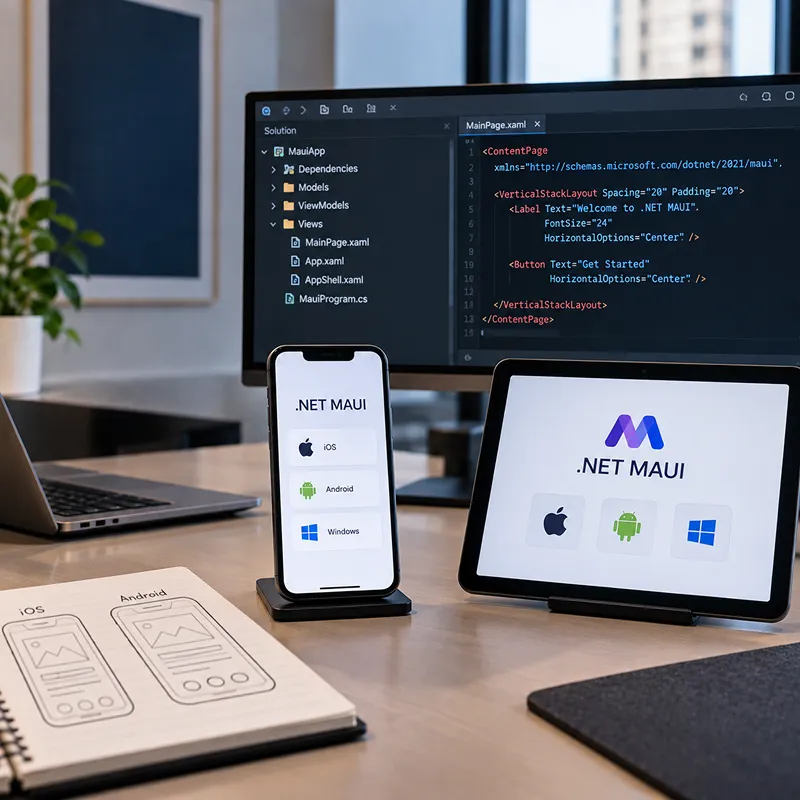
We migrate Xamarin.Forms applications to .NET MAUI and build cross-platform enterprise mobile applications for businesses that need one codebase to serve Android and iOS. Our clients span field service, healthcare, logistics, and manufacturing, but the same approach applies to any organization needing a mobile app connected to enterprise systems.
Our .NET MAUI practice covers Xamarin migration, legacy mobile app modernization, cross-platform development sharing business logic and UI, offline-first architecture with background sync, enterprise system integration, AI-powered mobile features, and the secure authentication enterprise mobile apps require by default.
We work with field service businesses needing technician apps with offline forms and GPS tracking, manufacturers needing inventory and inspection apps connected to their ERP, and enterprises with Xamarin applications facing Microsoft’s end of support deadline.
Every .NET MAUI engagement begins with an architecture decision for offline data storage, synchronization, and authentication, because these decisions determine whether the app actually works reliably for field employees without consistent internet access.
From incremental Xamarin.Forms to .NET MAUI migrations that preserve years of business logic to offline-first field service apps syncing job data the moment connectivity returns, we build at the depth enterprise mobile applications require.
Since 2007, Keyideas has delivered .NET MAUI and Xamarin mobile applications for field service, healthcare, and manufacturing clients across the United States, United Kingdom, and Australia.
We benchmark every .NET MAUI engagement against the offline reliability, security, and migration quality standards of well-architected enterprise mobile applications.
Keyideas has delivered .NET MAUI and Xamarin migration projects for field service, logistics, and manufacturing clients across the US, UK, and Australia.
Keyideas has built websites, platforms, and software products across more than 20 industry verticals over 18 years. We bring direct project experience to each industry we serve, not a generalist template applied to every client brief. Select an industry below to see what we have built in your market.

Healthcare websites, patient portals, appointment booking, and telemedicine solutions.

Websites for home improvement, maintenance, renovation, and repair services.
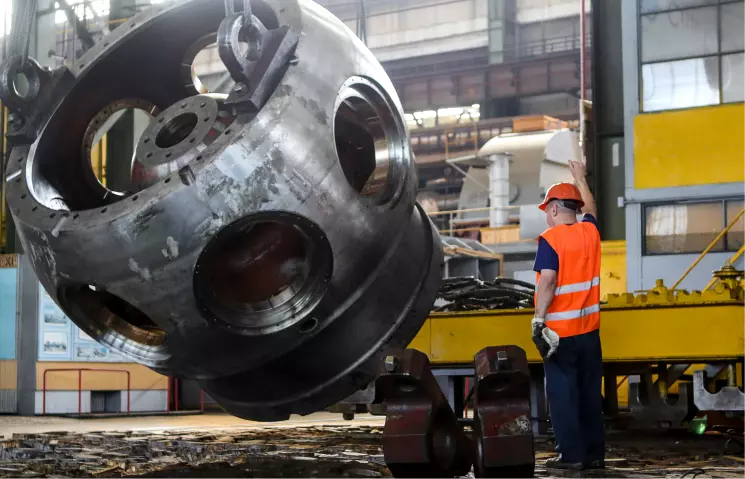
Custom software and websites for manufacturing and industrial businesses.
We select and combine .NET, Azure, databases, APIs, testing frameworks, and supporting technologies based on application complexity, integration requirements, scalability, security, and long-term maintenance.
We Build On
We Migrate From
From cross-platform mobile apps and native device features to custom UI, API integrations, performance optimization, and app modernization, we build .NET MAUI solutions around specific business requirements.
Microsoft ended support for Xamarin and Xamarin.Forms on May 1, 2024, making migration to .NET MAUI a requirement, not an option, for any organization still running a Xamarin application. We audit the existing Xamarin.Forms, Xamarin.Android, and Xamarin.iOS codebase for third-party library compatibility and custom renderer usage, then migrate incrementally, preserving the business logic and shared code architecture already built rather than starting from a blank project.
Many businesses have mobile applications that still work but are becoming expensive to maintain: outdated interfaces, unsupported dependencies, and authentication methods that no longer meet modern security standards. We modernize these applications, replacing unsupported packages, updating the UI to current platform design standards, and implementing modern authentication, addressing accumulated technical debt without necessarily requiring a full framework migration if the underlying architecture is still sound.
The core advantage of .NET MAUI is sharing code across platforms rather than building and maintaining two separate native applications. We build new cross-platform mobile applications from a single .NET MAUI codebase, sharing business logic entirely and UI substantially between Android and iOS, which reduces both the initial development cost and the ongoing maintenance burden of keeping two platform-specific codebases feature-equivalent over time.
Companies increasingly use mobile apps to extend internal business processes outside the office rather than keeping employees tied to a desktop. We build employee applications, sales and inventory apps, inspection and approval workflow tools, and operations applications that give staff mobile access to the same business processes and data they would otherwise need to be at a desk for, extending the reach of existing enterprise systems.
Field employees need mobile access to business systems while working away from a desktop, and this is one of the strongest .NET MAUI opportunities. We build field service applications covering job management, scheduling, digital work orders, photo and document capture, customer signature collection, and GPS tracking, built for construction, HVAC, plumbing, electrical, and equipment maintenance businesses whose workforce is rarely in an office.
Employees in construction, logistics, manufacturing, and field services do not always have reliable internet access, making offline-first architecture essential rather than optional. We build applications with local SQLite storage, background synchronization that uploads data automatically once connectivity returns, and conflict resolution logic that handles the case where the same record is edited both offline and by another user online, a scenario naive implementations frequently get wrong.
Businesses increasingly want their mobile app to be another interface for systems they already run, not an isolated tool collecting data nobody uses. We connect .NET MAUI applications to ERP and CRM systems, build REST and GraphQL API integration layers, and implement real-time data synchronization with cloud services and authentication systems, so field-collected data flows directly into the systems the rest of the business already depends on.
AI is becoming a standard feature in enterprise mobile apps rather than an experimental add-on, and companies are adding intelligence to workflows instead of building apps purely for data entry. We integrate AI assistants and AI-powered search into mobile workflows, build AI document processing and image recognition for inspection and compliance apps, and implement voice-based data entry and automated reporting that reduce the manual effort field and warehouse staff spend on routine documentation.
.NET MAUI is particularly useful as the mobile interface for connected systems where a phone or tablet needs to communicate directly with equipment or sensors. We build Bluetooth-connected device integrations, IoT dashboards displaying equipment status and sensor data, and real-time alert systems for manufacturing, healthcare, automotive, and smart building applications where the mobile app is the primary interface between a person and connected hardware.
Security is particularly important when a mobile application accesses corporate systems, and enterprise mobile security cannot be an afterthought added after initial development. We implement Microsoft Entra ID and OAuth 2.0 authentication, biometric login with device-level security enforcement, role-based access control matching the organization’s existing permission structure, and secure API communication, built as standard for finance, healthcare, and government mobile applications from the first architecture decision.
Getting a .NET MAUI application into the App Store and Play Store reliably requires infrastructure most teams underestimate until their first rejected submission. We build CI/CD pipelines using Azure DevOps or GitHub Actions that automate builds for both platforms, manage code signing and provisioning profiles so releases are not blocked by expired certificates, and handle phased rollout and app store review requirements so releases ship predictably rather than depending on one person’s manual process.
We use industry-leading tools to ensure smooth communication, efficient development and transparent project management
Plan tasks, timelines, and project resources efficiently.
Build scalable solutions with clean and secure code.
Monitor performance, fix issues, and manage updates.
Create wireframes, UI designs, and interactive prototypes.
Conduct meetings and discussions to stay aligned.
Questions from technical decision-makers about .NET MAUI and Xamarin migration with Keyideas.
Have a question or need support? Our team is here to help and will get back to you within one business day.
* indicates required fields