












































Automotive and Transportation
Digital solutions for dealerships, logistics, mobility, and transportation businesses.
A store that only lets customers browse and checkout is competing on price alone. We build for discovery and retention.
Contact UsBelow is an overview of the key areas we cover when building ecommerce platforms for growing brands, explained in more detail below.
Explore ecommerce projects from brands around the world, each reflecting strong product discovery and conversion-focused design.
Keyideas has built websites, platforms, and software products across more than 20 industry verticals over 18 years. We bring direct project experience to each industry we serve, not a generalist template applied to every client brief. Select an industry below to see what we have built in your market.

Healthcare websites, patient portals, appointment booking, and telemedicine solutions.

Websites for home improvement, maintenance, renovation, and repair services.

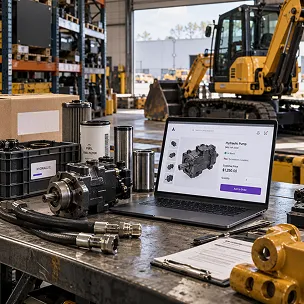
Custom software and websites for manufacturing and industrial businesses.
Ecommerce development only works when grounded in real platform expertise across storefronts, integrations, and automation tools.
We Build On
We Migrate From
From AI-powered shopping to checkout optimization, these eleven capabilities cover ecommerce development end to end.
A customer who cannot find the right product or get a useful answer from search leaves for a competitor’s store instead of digging through your catalog manually. We develop AI-enhanced ecommerce experiences including product recommendations, conversational shopping assistants, intelligent search, personalized merchandising, and customer support automation, built to improve product discovery, engagement, and conversion rather than added as a generic feature layered onto the existing catalog.
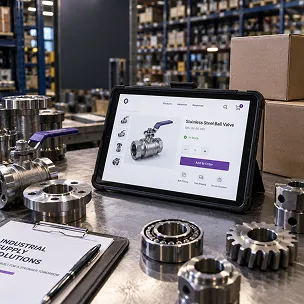
A catalog that has grown past a few hundred SKUs without investing in search and filtering is asking customers to do the work a modern ecommerce platform should be doing for them. We build advanced filtering, faceted navigation, intelligent search, product comparison, and guided product selection tools that help customers find the right product faster, particularly for jewelry, fashion, electronics, and industrial catalogs where product attributes and specifications genuinely matter to the buying decision.
A customer who wants a personalized or made-to-order product but cannot configure it online either calls your store or buys a standard version from a competitor who lets them customize it themselves. We develop interactive configurators, ring builders, product customizers, bundle builders, and visualization tools that let customers build the exact product they want, increasing both engagement and average order value for jewelry, luxury retail, furniture, and manufacturing businesses selling customizable products.
A B2B buyer who cannot see their negotiated pricing, order in bulk, or check inventory online defaults to email and phone, a process that costs your team time and gives buyers less reason to stay loyal to your store over a competitor’s. We build B2B ecommerce platforms with customer-specific pricing, dealer portals, wholesale ordering, account-based purchasing, and ERP integration, giving business buyers the self-service convenience they now expect from B2C ecommerce.
A slow-loading product page or checkout flow costs conversions regardless of how good the design or product selection is, and ecommerce sites with large catalogs are especially prone to performance problems that accumulate as the catalog grows. We optimize ecommerce site speed and Core Web Vitals at the code and infrastructure level, including image and asset optimization at scale, treating performance as a conversion-rate factor built into development rather than an afterthought addressed after launch.
A business that has outgrown its current ecommerce platform’s scalability, performance, or integration limitations but is afraid to migrate because of the SEO and revenue risk is stuck choosing between a limiting platform and a risky move. We plan and execute ecommerce migrations, from Shopify, WooCommerce, Magento, Wix, Squarespace, and OpenCart, preserving SEO rankings, customer data, order history, and business continuity throughout the transition rather than treating the migration as a rebuild from zero.
Acquiring a new customer costs more every year, which makes a store that has no retention strategy beyond generic email blasts increasingly expensive to run. We integrate ecommerce platforms with marketing automation solutions including Klaviyo, building email automation, SMS marketing, customer segmentation, loyalty programs, and lifecycle marketing connected directly to actual purchase behavior, improving retention and lifetime value rather than treating every customer the same regardless of their order history.
A default theme with your logo and colors swapped in looks like every other store running the same theme, and that similarity is exactly what makes a storefront forgettable to shoppers comparing options. We design and build custom ecommerce themes and storefronts with responsive layouts built for every device, creating a shopping experience that actually reflects your brand rather than a template with minor cosmetic changes applied on top.
A checkout that takes six taps and thirty seconds to load is losing mobile customers at the exact moment they were ready to buy, and mobile now represents the majority of traffic for most consumer categories. We design ecommerce experiences optimized for mobile-first engagement, including simplified checkout, fast-loading pages, touch-friendly interfaces, and mobile product discovery, particularly for fashion, jewelry, beauty, and DTC brands where mobile conversion determines overall store performance.
A growing ecommerce business making inventory, marketing, and product decisions without reliable data is guessing at scale, and the guesses get more expensive as the business grows. We build reporting and analytics capabilities covering customer behavior analysis, funnel optimization, product performance reporting, revenue attribution, customer segmentation, and inventory insights, giving growing ecommerce businesses the data foundation needed to make informed decisions rather than relying on intuition alone.
A checkout process with too many steps, unclear shipping costs, or limited payment options is one of the most common reasons a shopper abandons a cart at the exact moment they were ready to buy. We build streamlined checkout flows with multiple payment methods, including buy now pay later options, and the trust signals, security badges, clear policies, visible reviews, that give hesitant shoppers the confidence to complete a purchase.
We use industry-leading tools to ensure smooth communication, efficient development and transparent project management
Plan tasks, timelines, and project resources efficiently.

Build scalable solutions with clean and secure code.
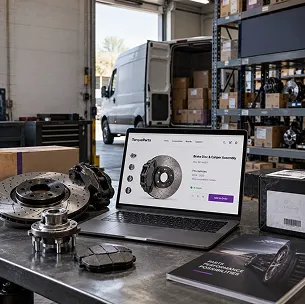
Monitor performance, fix issues, and manage updates.
Create wireframes, UI designs, and interactive prototypes.
Conduct meetings and discussions to stay aligned.

Questions ecommerce founders and operations leaders most commonly ask before choosing Keyideas for an ecommerce development project of any scope.
Have a question or need support? Our team is here to help and will get back to you within one business day.
* indicates required fields