Jewelry Retail Website Solutions with 360° Real-Time Rendering
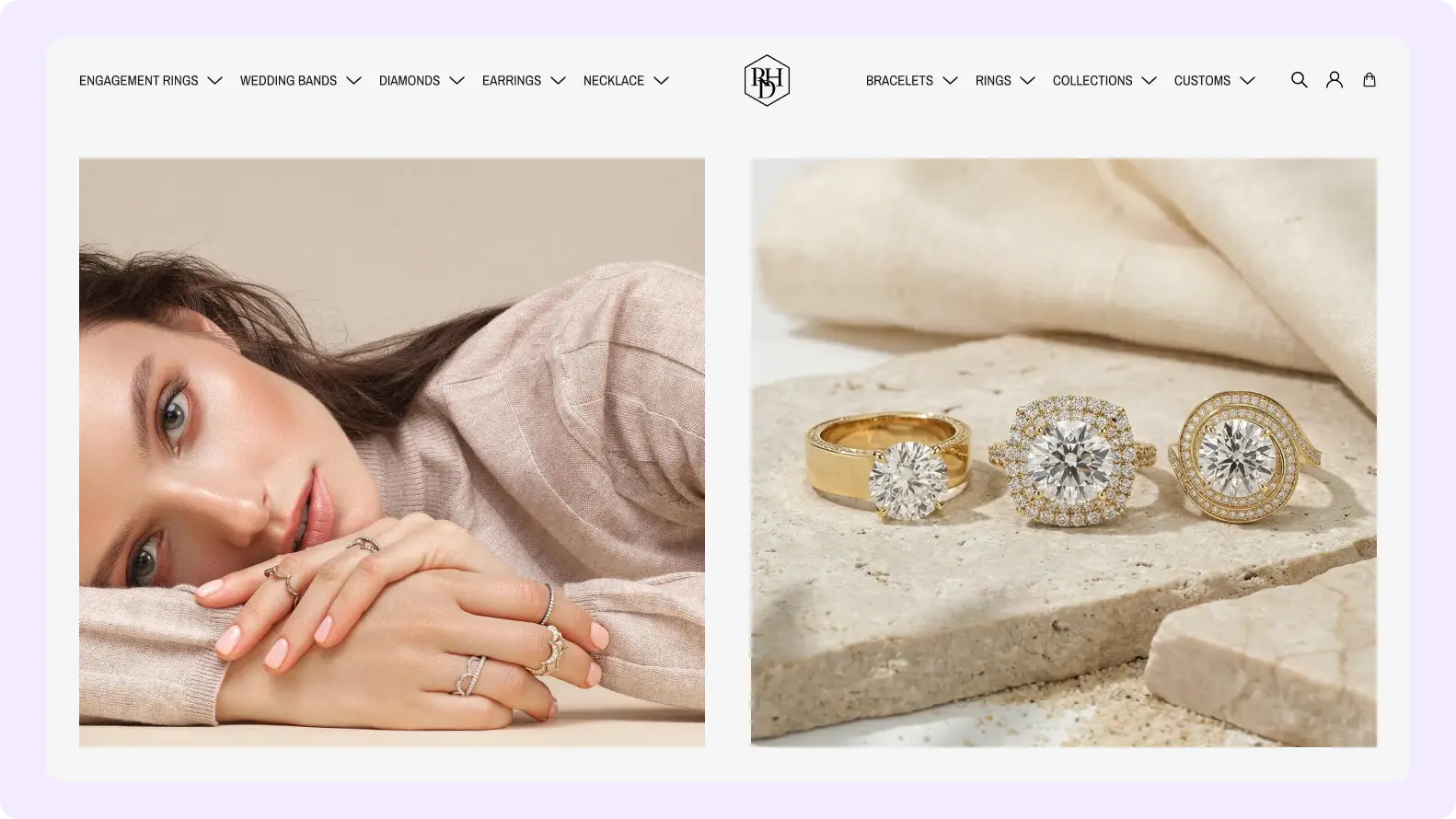
If your diamond jewelry website cannot show a buyer what their configured ring looks like before they commit, you are asking them to spend several thousand dollars on a mental image they constructed themselves. Robin Hood Diamonds sells lab-grown, natural, and colored diamonds through a direct-to-consumer model, and the gap between a buyer’s ability to configure a ring and their ability to see that configuration accurately across different metal types, diamond shapes, and carat variations was the most consequential limitation on the brand’s ability to convert high-intent buyers.
A jewelry website sourcing diamonds from multiple supplier feeds simultaneously faces a product data problem that compounds with every new supplier added. When stone attributes, certification data, and pricing from different feeds are not consistently mapped into the catalog, the buyer-facing result is incorrect product information and a browsing experience that erodes trust at the moment a buyer is trying to make a high-confidence decision. For a brand built on sourcing credibility and production transparency, inaccurate product data is not a technical inconvenience: it is a brand-level credibility failure.
Navigation architecture is a conversion problem as much as a design one. A jewelry brand selling engagement rings, lab-grown diamonds, natural diamonds, and colored stones across multiple configuration options needs a menu structure that makes its full offering accessible without requiring buyers to already know what they want. When navigation cannot surface the relevant category for a buyer’s intent in one step, the buyer either moves to a competitor whose structure is clearer or defaults to the most visible product rather than the one most suited to their brief.
Broken interactions, inconsistent browser display, and slow page load times accumulate invisibly until they start costing sales the team cannot attribute to a specific cause. A buyer who encounters a broken interaction on a product page does not report the issue: they leave. A buyer whose browser presents the site incorrectly encounters a brand that does not meet the standard their purchase requires. For a DTC diamond brand competing on production quality and sourcing transparency, a website that behaves inconsistently is a brand contradiction the team may not know exists.
Keyideas integrated a complete Ring Builder into the Robin Hood Diamonds website, connecting live feeds from KIRA, VDB, and Nivoda to give buyers access to lab-grown, natural, and colored diamonds from a single guided workflow. The Ring Builder walks buyers through stone selection, setting selection, and metal type, generating a fully specified purchasable ring from their configuration. A custom mega menu was implemented to give the full Robin Hood Diamonds offering a navigable structure that surfaces the correct product category for each buyer’s intent without requiring multiple steps.
Keyideas integrated Jewelry Retail Website Solutions in Real-Time Rendering into the Robin Hood Diamonds product experience, allowing buyers to view their configured ring in 360 degrees across different metal types, diamond shapes, and carat variations as they build it. Rather than committing to a configuration they can only partially visualize, buyers see a photorealistic render updating in real time as each selection changes, closing the purchase confidence gap that causes high-intent buyers to abandon. Enhanced product detail pages were developed alongside the rendering integration, giving each jewelry item the specification depth its price point demands.
Keyideas resolved the product import and mapping issues causing incorrect attribute display across the Robin Hood Diamonds catalog, correcting the data pipeline between the KIRA, VDB, and Nivoda feeds and the product presentation layer so stone specifications, certification data, and pricing display accurately for every stone in the catalog. Multiple JavaScript errors were identified and resolved, restoring correct interactive behavior on product pages and the configuration workflow. Cross-browser compatibility problems were addressed to ensure consistent interaction across all major browser environments the brand’s buyers use.
Website speed and performance optimization was applied across the Robin Hood Diamonds platform, reducing load times for the product pages and configuration tools that carry the highest buyer session value. UI/UX refinements were implemented across the site to improve consistency and clarity at every stage from initial browsing through to ring configuration and purchase. These refinements addressed interaction design, visual hierarchy, and navigational clarity issues that had accumulated across the website and were contributing to buyer journey friction without presenting as a single failure the team could easily locate.
Have a question or need support? Our team is here to help and will get back to you within one business day.
* indicates required fields