How We Design, Build, and Ship Digital Products That Perform
Keyideas delivers websites, e-commerce, and software through a six-stage AI-enhanced framework, ensuring quality, speed, and reliability consistently.
CONTACT US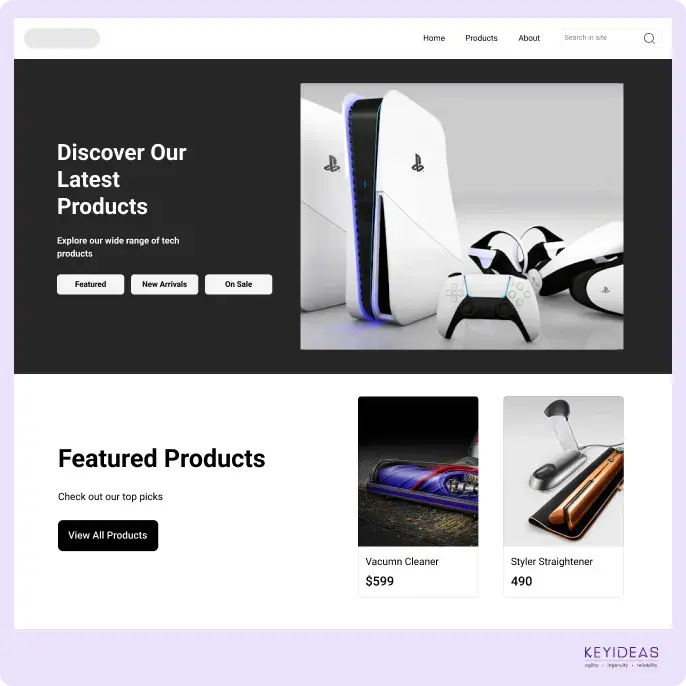
Efficient Processes Tailored for Software Development
Our structured delivery process ensures clear outcomes, documented decisions, and AI-powered improvements in accuracy, speed, and quality.

In-Depth Research and Analysis
Before we design a single screen or write a single line of code, we invest in understanding the business landscape, user expectations, and technical environment your product needs to operate in. For web design projects this means competitive analysis, user persona definition, and conversion benchmarking. For software development it means requirements gathering, system audit, and integration dependency mapping. The quality of this research determines the quality of every decision that follows.
Data Intelligence
We gather and analyze structured data from user interactions, search behavior, existing analytics platforms, and market benchmarks to identify what your audience needs, where current solutions fall short, and which opportunities are worth building toward. Every design and architecture decision that follows is grounded in this evidence rather than assumption or convention.
Heuristic Evaluation
For redesign and software migration projects, our UX specialists conduct a structured review of your existing product against established usability principles, identifying friction points, navigation failures, and conversion barriers before the design phase begins. This prevents inherited problems from carrying into the new build and gives us a concrete list of improvements the redesign must deliver.
Technologies Used
Structured Planning and Roadmap
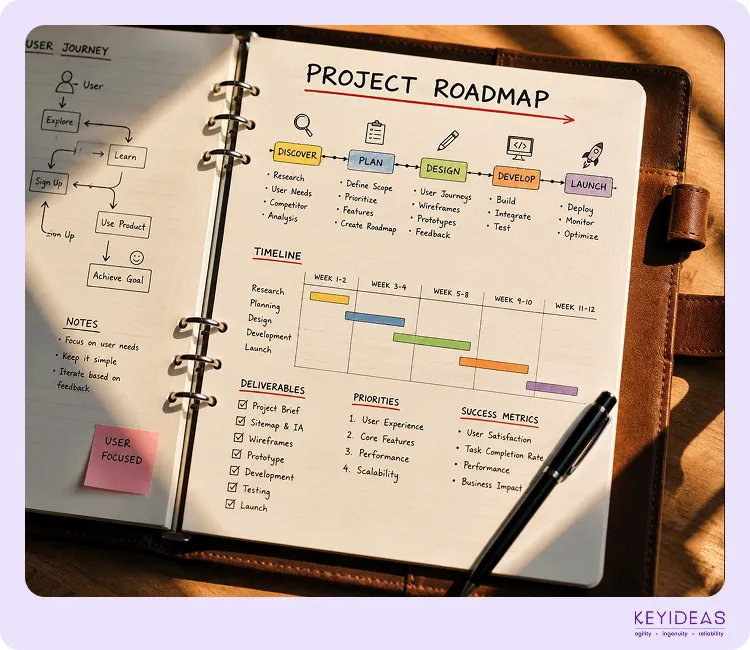
A project without a plan is a project heading toward scope creep, cost overrun, and delayed delivery. We invest heavily in the planning stage because every hour spent defining requirements, mapping dependencies, and aligning on milestones saves multiples of that in development. For web design projects this means defining page architecture, content requirements, and integration dependencies. For software development it means system design, data modeling, API strategy, and sprint sequencing across the full delivery roadmap.
Workflow Architecture
We map every user journey, define the information architecture, and create wireframes that show how each user type will navigate the finished product. For software development projects, this extends to system workflows, data flows, and integration point definitions. Documenting this before development begins surfaces conflicts and edge cases that are straightforward to resolve at the planning stage and expensive to resolve after development has started.
Feasibility Mapping
Our technical architects evaluate project requirements against available technology options, integration constraints, budget parameters, and long-term scalability needs to recommend the stack that best serves the project. For web projects this covers platform selection, plugin architecture, and hosting configuration. For software development it covers database design, API architecture, cloud infrastructure choice, and third-party service dependencies that will affect the build timeline and ongoing maintenance cost.
Design and Experience
Design at Keyideas is not decoration applied after architecture decisions are made. It is the translation of research findings and business requirements into an experience that serves both the user and the business objective. Whether we are designing a conversion-focused marketing website, a product configuration interface for an e-commerce platform, or the dashboard of a custom software application, our process produces interfaces that are functional before they are beautiful, and beautiful because they are functional.
Interactive Prototyping
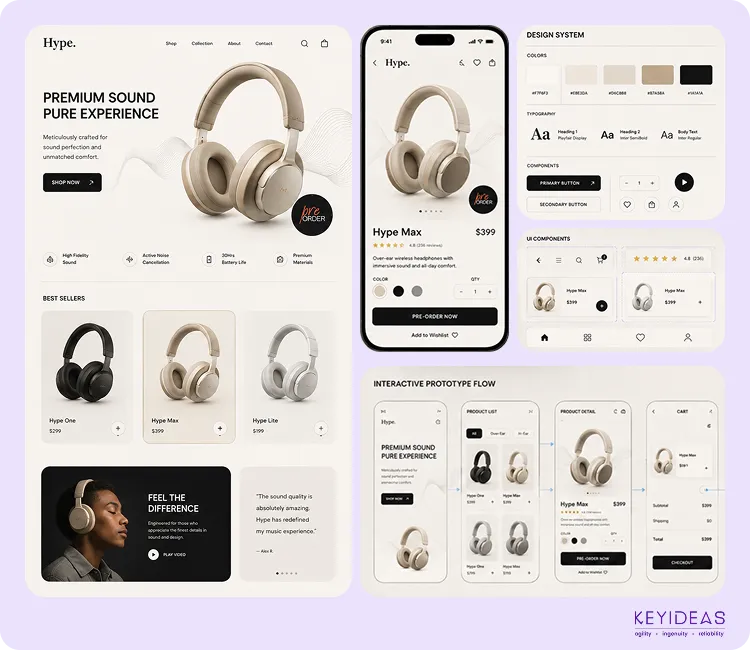
Before a single line of code is written, we build high-fidelity interactive prototypes that allow stakeholders to navigate the full product experience, test every user flow, and provide feedback on the interface while changes are still inexpensive to make. A design change at the prototype stage costs a fraction of what the same change costs after development has started. This is one of the most commercially important steps in our entire delivery process.
Design System
We build a complete design system for every project — a library of reusable UI components, typography rules, color tokens, spacing guidelines, and interaction patterns that ensures visual and behavioral consistency across every screen. For software development projects, the design system also serves as the primary handoff document that the development team implements directly, reducing interpretation gaps between what was designed and what actually gets built and shipped.
Technologies Used
Development and Implementation
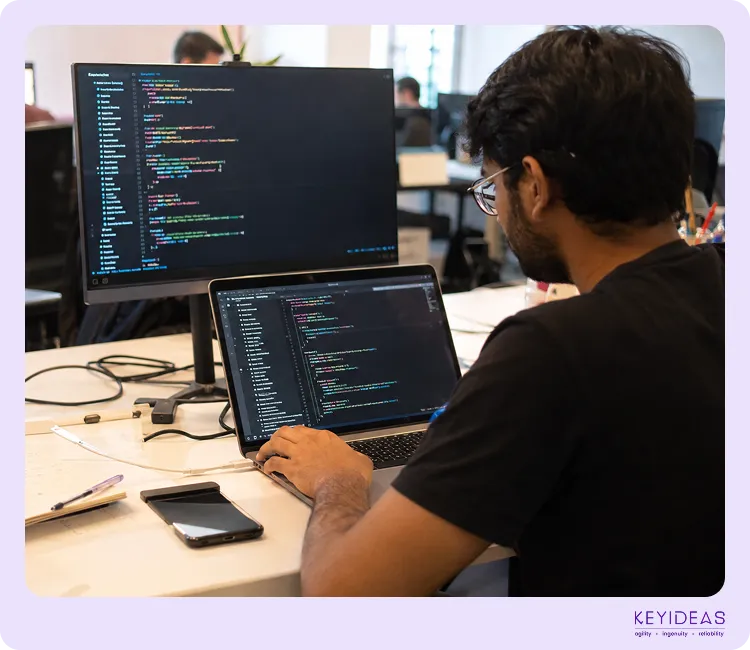
Development at Keyideas runs on agile methodology across web design and software development projects alike. We work in structured sprints with clear deliverables, regular client demos, and documented release cycles so you always know exactly what has been built, what is in progress, and what comes next. Code quality, maintainability, and documentation are part of the definition of done on every task — not optional extras addressed at the end of the project when budget and time have already been consumed.
Code Optimization
Every component we build is written for the performance it needs to deliver and for the developer who will maintain it after the project closes. We enforce consistent coding standards, conduct peer code reviews on every pull request, optimize database queries for real-world usage patterns, and build reusable component libraries that reduce duplication and make future feature development faster and less likely to introduce regressions into existing functionality.
API Orchestration
We design and implement integrations with payment gateways, CRM platforms, ERP systems, marketing automation tools, third-party data providers, and cloud services. For software development projects with complex multi-system architectures, we build API orchestration layers that manage service dependencies, standardize error handling, control authentication across systems, and ensure data integrity at every integration boundary throughout the full platform lifecycle.
Technologies Used
Testing and Optimization
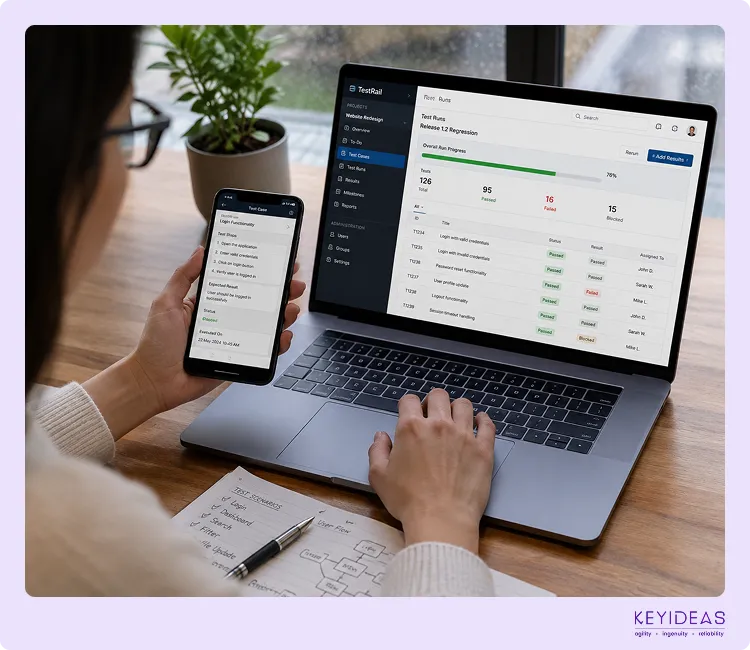
Nothing ships from Keyideas without passing through a structured quality assurance process calibrated to the project type. For web design projects this means cross-browser and cross-device testing, accessibility audits, and conversion flow validation. For software development projects it includes unit testing, integration testing, security vulnerability scanning, and load testing under realistic traffic conditions. We find and resolve problems in this stage — not in production, and not in front of your customers.
Regression Analysis
Every new feature or update is tested against the full existing feature set before it is released to production. Regression testing catches the cases where a new change produces an unintended side effect in a part of the system that was previously working correctly. For software projects with complex interdependencies — multiple integrated APIs, custom business logic, and stateful workflows — this step is non-negotiable and runs before every sprint release.
Stress Testing
We simulate peak traffic conditions and high concurrent user loads to identify the performance ceiling of the application before real users encounter it. For e-commerce platforms this means testing against projected seasonal or sale-day traffic volumes. For software applications it means testing against the maximum simultaneous user load defined in the project brief. Stress testing tells us where the system fails before it fails in front of a customer with a live transaction in progress.
Technologies Used
Deployment and Maintenance
Launch day is not the end of the process — it is the beginning of the product’s operational life. We manage deployment through a controlled pipeline that stages every release, validates it in a production-equivalent environment, and deploys it with rollback capability intact. After launch, we remain accountable for the platform’s performance through structured maintenance agreements that keep the product secure, current, and aligned with your evolving business requirements as the market and your team’s needs change.
CI/CD Pipeline
Our CI/CD pipeline automates the entire release chain from code commit to production deployment. Every update passes automated quality gates — unit tests, integration tests, and security scans — before it is eligible for release. This eliminates the manual error risk that comes with traditional deployment practices, accelerates release cycles from days to hours, and ensures that every version in production has been validated against a consistent and documented quality standard.
Adaptive Scaling
We configure infrastructure to scale dynamically with traffic demand so your application handles ten users and ten thousand with equal reliability. Post-launch monitoring covers performance metrics, error rates, uptime, and security events. When your business requirements change — new markets, higher traffic volumes, additional features — the infrastructure scales to match without requiring a full platform rebuild to absorb the growth or maintain the performance standard users expect.
Technologies Used
How We Collaborate With Our Clients
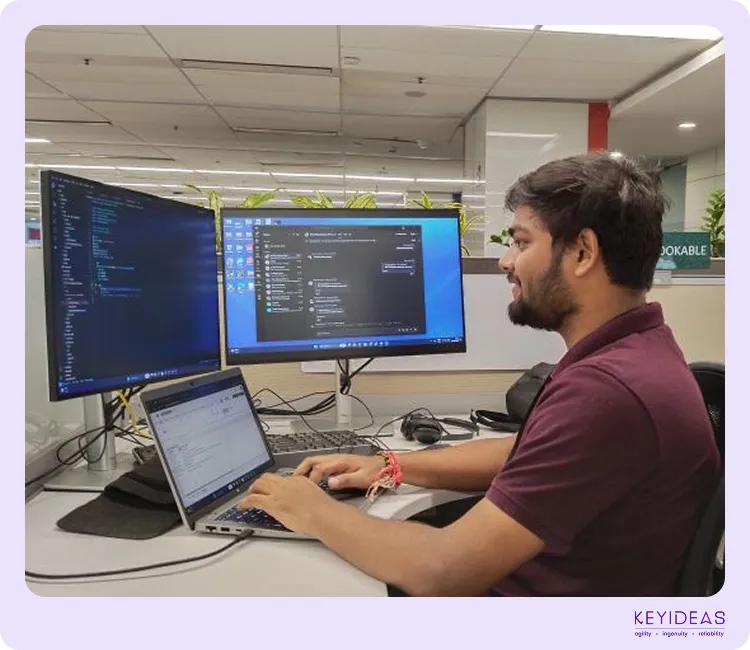
We use industry-leading tools to ensure smooth communication, efficient development and transparent project management.
Plan tasks, timelines, and project resources efficiently.
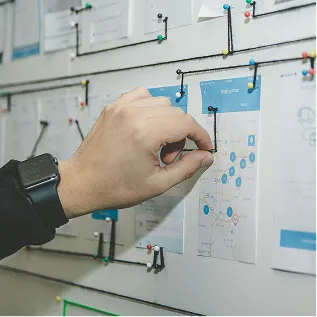
Create wireframes, UI designs, and interactive prototypes.

Build scalable solutions with clean and secure code.


Conduct meetings and discussions to stay aligned.
Monitor performance, fix issues, and manage updates.

Frequently Asked Questions
Common questions about working with Keyideas on web design, software development, and e-commerce projects.
Yes. The six-stage framework — Research, Planning, Design, Development, Testing, and Deployment — applies to all project types. The phases and their sequence are consistent. What changes between project types is the specific activities within each phase: a web design project and a software development project both move through the same stages, but the deliverables, tools, and depth of each phase are calibrated to the project’s technical requirements and business context.
Timeline depends on scope and complexity. A website design and development project typically runs 8 to 16 weeks from brief to launch. An e-commerce build with custom integrations is typically 12 to 20 weeks. A custom software development project is scoped individually based on feature requirements, integration complexity, and team size. We provide a detailed timeline with sprint milestones at the proposal stage so there are no surprises after the engagement begins.
AI tools are applied at every stage. In Research, AI accelerates competitor analysis and sentiment monitoring. In Planning, AI-assisted estimation improves accuracy of effort forecasts. In Design, AI generates and tests visual variations and runs accessibility audits. In Development, AI code assistance reduces error rates and speeds implementation. In Testing, AI generates test suites and performs visual regression analysis. In Maintenance, AI monitoring detects anomalies and predicts incidents before they affect users.
Your involvement is structured, not open-ended. We need your input at defined review points: requirements sign-off at the end of Research and Planning, design approval after the Design phase, UAT feedback during Testing, and go-live confirmation before Deployment. Between these checkpoints, your team receives regular updates but is not required to respond in real time. We design the engagement model to fit how your business actually operates, not around our internal workflow.
We work in sprints, which means scope changes can be incorporated at sprint boundaries rather than forcing mid-sprint disruption to the delivery team. Every scope change is documented with a clear impact assessment covering time and cost before any additional work begins. Nothing is added to scope without written agreement from both sides. This keeps the project budget predictable and prevents scope creep from compressing the testing and deployment stages where quality is most at risk.
Yes. We sign NDAs as a standard part of the engagement agreement before any project information is shared with the delivery team. All project work is conducted under strict data handling policies. Access to your codebase, designs, business data, and integration credentials is limited to the specific team members assigned to your project, with access revoked at the close of the engagement.
Yes. Our clients are based primarily in the US, UK, and Australia, and our delivery teams in Gurugram and Mumbai are structured to provide meaningful overlap with business hours across all three regions. Dedicated project managers ensure that communication, approvals, and decision-making are not blocked by time zone differences, and we configure the sprint demo and standup schedule around your team’s working hours.
Every project includes a warranty period after launch covering bug fixes and performance issues at no additional cost. After the warranty period, ongoing maintenance and development are available through a monthly retainer. Retainer clients receive priority response times, monthly performance reports, and proactive recommendations for feature development and infrastructure optimization. Most long-term clients stay with Keyideas for post-launch work because the team that built the platform is best positioned to evolve it.
Have a question or need support? Our team is here to help and will get back to you within one business day.
* indicates required fields