














Automotive and Transportation
Digital solutions for dealerships, logistics, mobility, and transportation businesses.
We build custom WooCommerce stores with AI recommendations, subscription commerce, B2B portals, and the ERP integrations hosted platforms cannot support.
Contact Us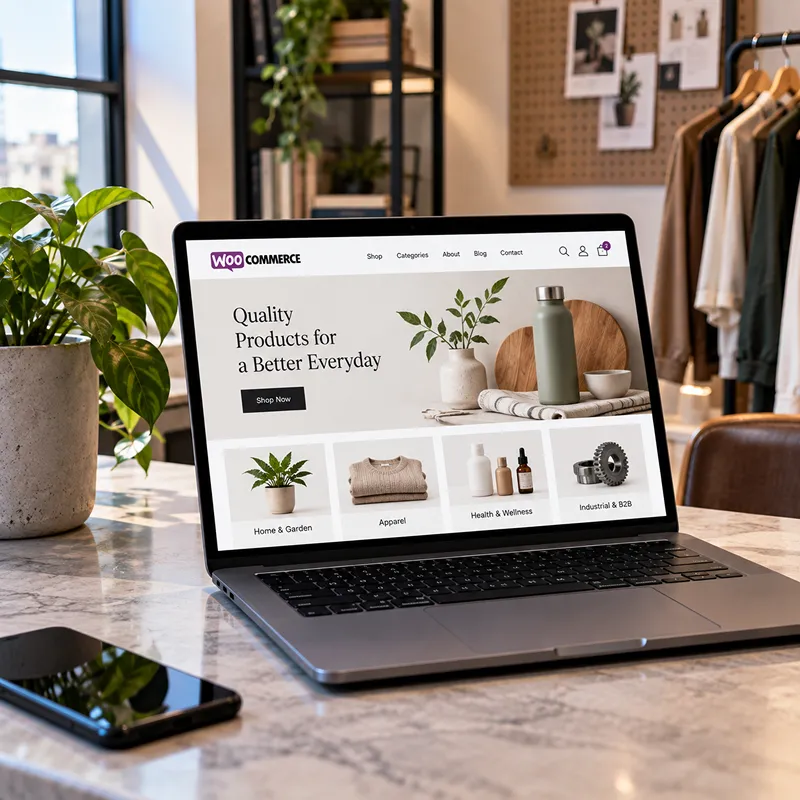
Below is an overview of the key areas we cover when building custom WooCommerce stores across product categories, explained below.
We benchmark every WooCommerce engagement against the performance, conversion, and catalog quality standards of the strongest stores in each category.
Explore real WooCommerce projects we have delivered for retailers around the world, each reflecting strong catalog architecture and conversion focus.
Keyideas has built websites, platforms, and software products across more than 20 industry verticals over 18 years. We bring direct project experience to each industry we serve, not a generalist template applied to every client brief. Select an industry below to see what we have built in your market.

Healthcare websites, patient portals, appointment booking, and telemedicine solutions.

Websites for home improvement, maintenance, renovation, and repair services.
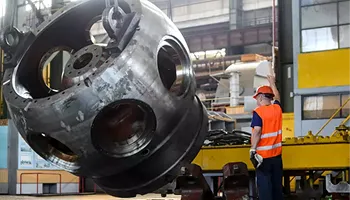
Custom software and websites for manufacturing and industrial businesses.
WooCommerce development only works when grounded in real expertise across B2B, subscription, and payment tools.
We Build On
We Migrate From
From custom WooCommerce themes and plugin development to store migrations, headless commerce, third-party integrations, performance optimization, and multi-store architecture, we build WooCommerce solutions around specific business requirements.
The difference between a WooCommerce store that suggests random related products and one that surfaces what each customer is most likely to buy next is the difference between a generic catalog and a store that sells. We integrate AI recommendation engines on product pages, cart drawers, and post-purchase pages for apparel, home and garden, beauty, and wellness brands. Outfit builders for fashion stores surface complementary items based on the viewed product. Bundle recommendations for home and garden brands increase order value by combining products customers consistently buy together.
A customer who cannot find their size in three clicks leaves. A trade buyer who cannot filter by voltage and compatibility specification buys from a competitor. We design the WooCommerce product attribute schema before any products are imported, build the faceted filter experience that matches how buyers in each category actually shop, and implement the search indexing that returns accurate results on stores with thousands of SKUs. For apparel brands, size and color filtering. For electronics and industrial stores, technical specification and compatibility filtering.
Subscription commerce applies across more WooCommerce categories than most stores have implemented it. Beauty brands run subscription replenishment for skincare and cosmetics. Wellness brands sell monthly supplement auto-ship. Food brands build subscription boxes. Pet supply stores automate breed-specific food delivery. We configure WooCommerce Subscriptions with the pricing tiers, delivery frequency options, trial periods, pause flows, and failed payment recovery sequences that protect recurring revenue. The dunning sequences that recover failed payments are often worth as much as the initial subscriber acquisition.
B2B wholesale is one of the largest WooCommerce segments and the one most agencies underserve. We build dealer and distributor ordering portals with account-based login, company-specific product catalogs, and pricing that reflects each buyer’s negotiated rate rather than public pricing. RFQ workflows let trade buyers request quotes on large or custom orders rather than forcing every transaction through a standard checkout. Bulk order forms, CSV order upload, minimum order quantity enforcement, and purchase history give B2B buyers the self-service tools they need to reorder without contacting a sales rep.
Home and garden customers want to see how a piece of furniture looks in their room before buying. Industrial buyers need to specify dimensions, materials, and configurations before a price can be given. Apparel buyers want to build an outfit rather than browse individual products. We build room visualizers that let home and garden customers place products in their own space, custom product builders for made-to-order and configurable products, and guided buying assistants that ask qualifying questions and surface the right product rather than leaving the customer to navigate the catalog alone.
Showing every visitor the same price is a requirement for consumer stores and a problem for every B2B and trade business. We configure WooCommerce customer group pricing so trade buyers, wholesale accounts, and loyalty members see their negotiated rates rather than public pricing, set minimum order quantities and volume tier discounts that apply automatically at checkout, and build the dynamic pricing rules for promotional periods and loyalty thresholds that consumer and B2B stores both require. For manufacturing and industrial distributors, customer-specific pricing is the feature that makes WooCommerce the right platform choice over hosted alternatives.
A WooCommerce store without marketing automation is leaving revenue on the table every day. For B2C brands in beauty, wellness, apparel, and food, Klaviyo for WooCommerce manages abandoned cart recovery, post-purchase education, replenishment reminders, and win-back sequences for lapsed customers. For B2B brands, HubSpot or Salesforce integration connects WooCommerce orders and quote requests to the CRM so the sales team has the purchase history and account data they need without manual reconciliation. We configure and test all automation flows before the first customer arrives at the store.
Acquiring a new customer costs five to seven times more than retaining an existing one. Loyalty programs on WooCommerce keep that cost from repeating on every purchase. We build points-based reward programs for apparel, beauty, and wellness brands where earn and redeem mechanics drive repeat purchase, referral programs that convert satisfied customers into acquisition channels, and membership tier systems that give the brand’s best customers exclusive pricing, early access, and the status that keeps them buying rather than testing a competitor. For health and supplement brands, membership communities create the retention that repeat-order economics require.
A WooCommerce store operating in isolation from the business’s ERP creates manual reconciliation work that grows with every order and every SKU added to the catalog. We connect WooCommerce to NetSuite, SAGE, Xero, and custom ERP systems with event-driven data flow: orders land in the ERP in real time, inventory levels update in WooCommerce when stock changes in the warehouse, and customer pricing rules from the ERP reflect in WooCommerce without manual synchronization. For manufacturing and industrial brands with thousands of technical SKUs, live inventory sync is the operational requirement that makes the store commercially viable.
Most WooCommerce stores lose customers between the product page and the order confirmation without knowing exactly where or why. We audit the full purchase funnel, identify the specific friction points in the checkout flow, product page, and cart experience, and test changes against real traffic before making them permanent. For home and garden brands, before-and-after project galleries and customer reviews on product pages close the confidence gap that high-consideration purchases require. For B2B stores, streamlined quote and checkout processes reduce the friction that loses trade buyers to phone orders.
Manufacturing and industrial businesses often need WooCommerce to function as a product information and ordering system rather than a standard consumer checkout. We build WooCommerce catalog sites where the primary buyer action is submitting an RFQ rather than adding to cart, configure technical specification attributes and documentation downloads per product, and build distributor portals where dealer accounts see their specific pricing, product range, and order history without accessing the public catalog. This is the WooCommerce configuration that beats Shopify for industrial and manufacturing businesses where the buying process involves a sales conversation before an order is confirmed.
Choosing plugins and hosting infrastructure before actually planning the product catalog architecture means building decisions on assumptions that often need to be undone once real catalog complexity becomes clear. We start every WooCommerce engagement with catalog architecture planning, plugin selection, and hosting infrastructure decisions made deliberately before development starts, because these foundational choices determine performance and maintainability more than anything that follows, and retrofitting them later costs far more than getting them right from day one.
A brand migrating from Shopify to WooCommerce to eliminate transaction fees or gain code-level control needs the same data integrity discipline any platform migration requires, not a rushed export that leaves gaps discovered after launch. We migrate stores from Shopify to WooCommerce, transferring product catalogs, variant and attribute mapping, customer records, and order history while building complete URL redirect mapping, validating data at every stage before it touches the live WooCommerce store rather than assuming the transfer worked correctly.
A WooCommerce store left unmaintained accumulates outdated plugins, unpatched security vulnerabilities, and hosting configuration drift that makes the next feature request more expensive than it needed to be. We provide ongoing WooCommerce support and maintenance, including a dedicated WooCommerce developer through our Enterprise Partnership model, keeping plugins, WordPress core, and hosting configuration current between major projects rather than letting the store accumulate the kind of technical debt that eventually forces an unplanned rebuild.
We use industry-leading tools to ensure smooth communication, efficient development and transparent project management
Plan tasks, timelines, and project resources efficiently.

Build scalable solutions with clean and secure code.

Monitor performance, fix issues, and manage updates.

Create wireframes, UI designs, and interactive prototypes.

Conduct meetings and discussions to stay aligned.

Questions from brand owners and business operators exploring WooCommerce development with Keyideas today, covering platform choice, cost, and project timelines.
Have a question or need support? Our team is here to help and will get back to you within one business day.
* indicates required fields