Bespoke Jewelry Store Website Design That Gives Your Team Control
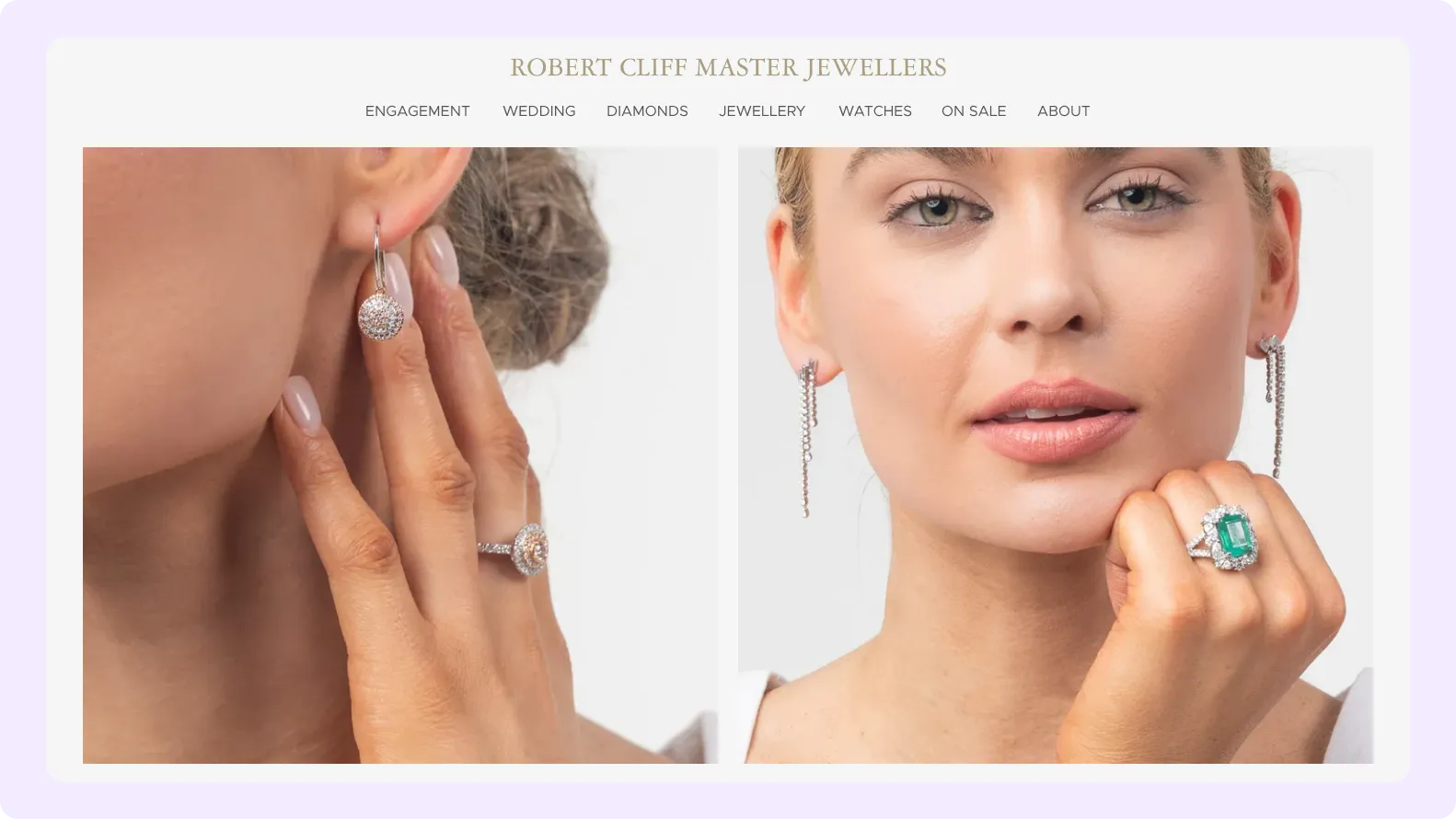
If your jewelry store website was built by an agency that no longer responds, loads slowly on every device, and requires a developer to change a single word on any page, you are not running a website: you are maintaining a liability. Robert Cliff Master Jewellers operates across two store outlets in Australia and had a WordPress website with persistent performance and caching issues. The team could not edit or update any content without external developer involvement, leaving them fully dependent and unable to respond to their own market.
A jewelry store with two physical outlets needs a website that reflects both locations accurately, updates without delay when opening hours change or a new collection arrives, and surfaces the right product and service information for buyers in each market. When a content management system is too complex or too broken for the in-house team to use, every update becomes a project request, every request costs time, and every delay means a buyer on the website encounters information that no longer reflects what the store actually offers today.
Robert Cliff Master Jewellers serves at least three distinct buyer types simultaneously: the engagement ring couple beginning a months-long research process, the buyer who arrives knowing their preferred diamond shape and setting style, and the watch collector evaluating luxury timepieces. Each of these buyers expects a different discovery experience, a different level of technical product detail, and a different path to purchase or consultation. A slow, uneditable website with performance issues cannot serve any of them well, let alone all three at once across two geographic store locations.
Every week a jewelry retailer operates on a platform that performs poorly and cannot be managed without a developer is a week spent sending buyers to competitors whose websites work. The cost is not only the sales lost to abandonment but the brand damage that comes from a digital experience that contradicts the quality of the physical store. For a multi-outlet jeweler building long-term client relationships, the gap between the in-store experience and the website experience is not a technical problem: it is a positioning problem that compounds over time.
Keyideas recommended migrating Robert Cliff Master Jewellers from WordPress to Shopify and delivered the full project in three months, covering UI/UX design, visual design, front-end and back-end development, and ongoing maintenance all managed by the same team. The Shopify platform gave the jewelry store team direct and full control over every page, product, and collection without developer involvement for routine updates. The entire website was rebuilt from the ground up, giving the brand a coherent visual identity across both outlet locations and every product category.
Keyideas integrated its Shopify Ring Builder app into the Robert Cliff Master Jewellers website, giving buyers access to over half a million certified diamonds directly on the store’s product pages. The Ring Builder connects stone selection, setting choice, and metal type in a guided step-by-step workflow that mirrors the in-store consultation experience online. Keyideas also integrated its Filter and Search app, enabling buyers to filter the full diamond and jewelry inventory by cut, carat, color, clarity, shape, and price with real-time results across the entire catalog.
For the luxury watch segment of the Robert Cliff catalog, Keyideas integrated its Timenox app, powering dedicated watch listing pages that display condition grading, reference numbers, movement specifications, service history, and authentication records. Standard jewelry product page templates cannot structure this data correctly, and the difference is immediately visible to any serious watch buyer evaluating a purchase. Klaviyo email marketing was also integrated across both outlet locations, enabling segmented campaigns for engagement ring buyers, watch collectors, and service inquiry leads with automated sequences matched to each buyer’s stage.
Site speed and SEO architecture were treated as primary design constraints from the first day of the build, not post-launch additions. Page load performance was engineered into the Shopify theme at the component level, delivering fast, consistent load times across desktop and mobile without relying on the caching workarounds that had caused ongoing instability on the previous WordPress installation. The SEO structure was built with correct heading hierarchies, crawlable product and service pages for both outlet locations, and a content architecture positioned for local and category search across the store’s target Australian markets.
Have a question or need support? Our team is here to help and will get back to you within one business day.
* indicates required fields