WooCommerce Ring Builder and Filter for Hatton Garden Diamond
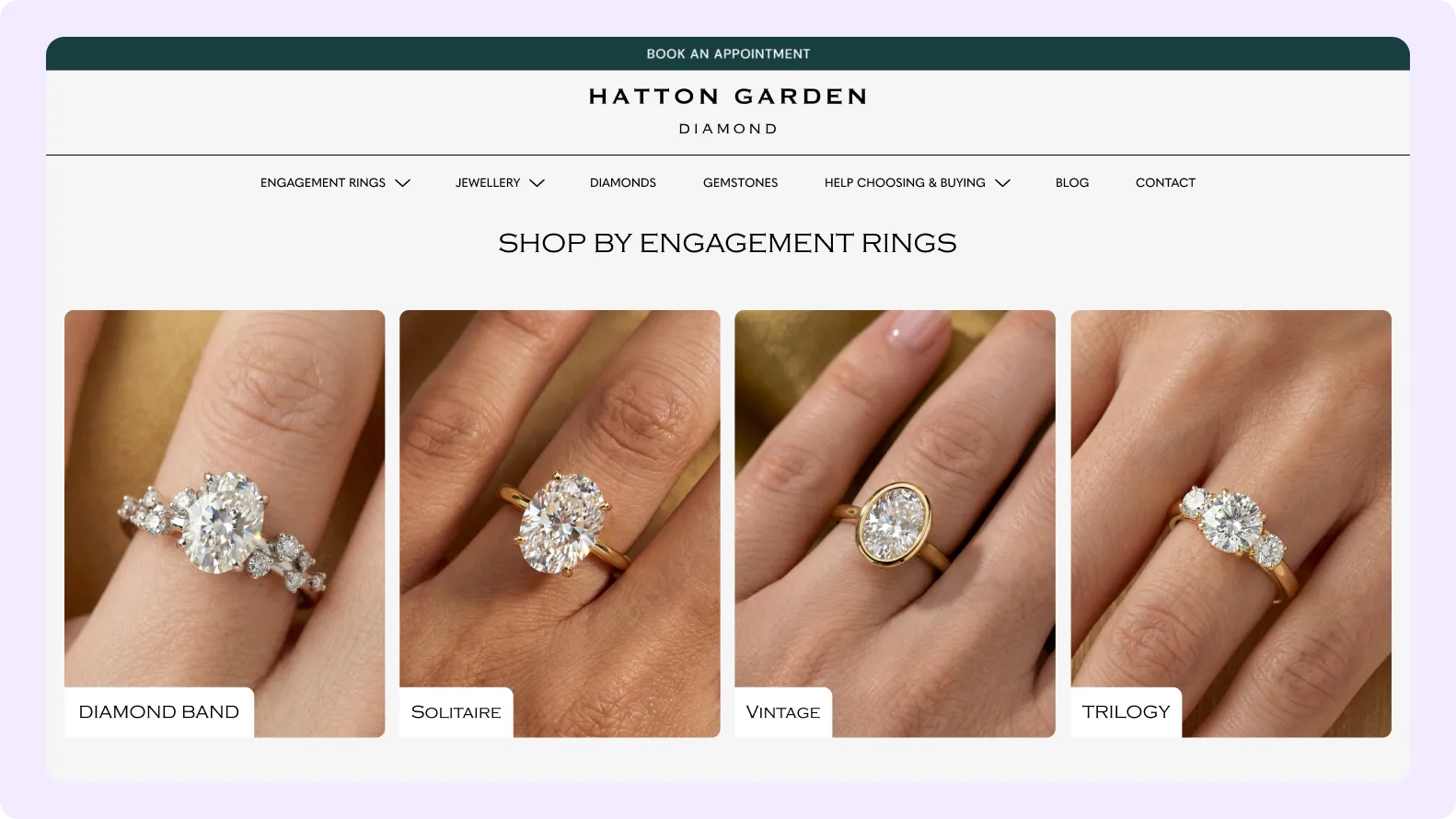
If your Hatton Garden jewelry commerce platform development presents buyers with a ring builder experience that functions below the standard set by the international platforms a UK buyer has already visited before arriving at your site, the geographic authority of the Hatton Garden address does not protect you from the comparison. Hatton Garden Diamond is a UK-based bespoke engagement ring specialist, and the quality of the digital ring building and diamond search experience is as much a part of its competitive positioning as its presence in London’s most trusted jewelry district.
A UK-based jeweler whose website defaults to USD pricing is not presenting as a UK business to a buyer in London, Manchester, or Edinburgh. Pricing denomination is not a cosmetic detail: it tells the buyer whether the website was built for them or for someone else. A buyer evaluating an engagement ring in pounds who encounters US dollar prices is being asked to perform mental arithmetic at the exact moment they should be building confidence in the brand. This friction communicates inattention to the buyer’s context.
The step-by-step build journey, presented as a numbered sequence guiding the buyer from diamond selection to setting choice to purchase, is among the most scrutinised UX patterns in engagement ring e-commerce. Buyers who have visited leading platforms arrive with a formed expectation of what a high-quality build interaction looks and feels like. When a studio’s configuration strip does not meet that expectation visually or functionally, the deficit is immediately visible to a buyer who has already seen the benchmark and is comparing directly before making a final decision.
Product discovery on an engagement ring website carries a specific UX challenge: a buyer browsing a category page wants to assess a ring’s design from multiple angles before clicking through to the full product page. When a product card shows only a single static image, the buyer must commit to a click to see anything beyond the default view. That friction compounds across dozens of rings in a browsing session and reduces the number of products meaningfully evaluated before fatigue or competitor comparisons interrupt the session.
Keyideas installed the WooCommerce Ring Builder on the Hatton Garden Diamond website, completing the setup and configuration required to connect the guided ring building workflow to the store’s existing diamond and setting inventory. The Keyideas Jewelry Filter and Search plugin was installed alongside the Ring Builder, giving buyers advanced attribute-based filtering across the diamond catalog with the search and discovery architecture required to support a large-inventory UK engagement ring operation. Both plugins were configured to work within the existing WooCommerce store rather than requiring a platform migration or full site rebuild.
The default layout of the Jewelry Filter and Search plugin was redesigned to replicate the Ramzi layout, matching the specific visual and structural approach the client and their buyers had responded to more positively than the stock design. This preference, identified through direct client feedback, determined the information hierarchy, filter panel placement, and product grid structure the plugin presents to buyers browsing the diamond catalog. The Ramzi layout replication ensured the filter experience matched the visual standard the client had established as the benchmark for their audience.
The BYOR strip, the step-by-step numbered interface guiding buyers through the ring building sequence, was redesigned twice. The first redesign replicated the visual style of AustenBlake, matching the presentation standard of a UK and international competitor the client referenced as the benchmark. The strip was subsequently refined a second time to incorporate a Brilliant Earth-inspired design featuring View and Change links at each step, giving buyers the ability to review and modify selections at any stage of the configuration without losing progress or restarting the sequence from the beginning.
The store’s default currency was switched from USD to GBP, ensuring the Hatton Garden Diamond website presents as a UK business to every buyer and removing the localisation mismatch that contradicted the brand’s UK market focus. Hover effects were implemented on the engagement rings category page to display a dynamic second image on each product card when a buyer hovers, with the secondary image pulled from the matched variation’s gallery. This gives buyers additional visual context for each ring without requiring a click through to the full product page.
Have a question or need support? Our team is here to help and will get back to you within one business day.
* indicates required fields