
Retail and education environments rely heavily on digital touchpoints to engage users within physical spaces. Over time, several proximity based technologies have attempted to bridge offline interactions with digital experiences. iBeacons were among the earliest to gain attention for enabling location based engagement inside stores, campuses, and institutions.
However, user behaviour, privacy expectations, and platform policies have changed significantly. Technologies that depend on dedicated hardware, mandatory app installs, and persistent permissions now face adoption challenges. As a result, retail businesses and educational institutions increasingly favour simpler and more accessible engagement methods that align better with how people actually interact today.
Where iBeacons Stand in the Current Landscape
iBeacon technology, introduced by Apple, uses Bluetooth Low Energy signals to trigger actions on nearby smartphones. In controlled environments, this allowed applications to respond when users entered or exited specific physical zones.
Today, the role of iBeacons is far more limited. Their effectiveness depends on multiple conditions being met simultaneously, including a pre installed app, enabled Bluetooth, granted location permissions, and ongoing background access.
Why iBeacons Are No Longer a Default Engagement Solution
With stricter operating system policies and increased privacy awareness from both Apple and Google, these conditions are increasingly difficult to satisfy at scale. As a result, iBeacons are no longer a default solution for engagement in retail or education.
Impact of App Dependency and Privacy Restrictions
Engagement technologies that require persistent background tracking and continuous permissions now face resistance from users who prioritise privacy and minimal friction.
Why Retail and Education Have Shifted Away from iBeacons
Changing User Behavior and Adoption Challenges
The biggest limitation of iBeacons is not technical. It is behavioural. Most customers and students are unwilling to download a dedicated app simply to receive location based messages. This friction significantly reduces adoption and impact.
Platform and Privacy Policy Limitations
Privacy regulations and platform level restrictions have reduced the effectiveness of passive proximity tracking. Organisations now prioritise engagement methods that are instantly usable, consent driven, device agnostic, and easy to deploy and scale.
Modern Alternatives Used in Retail Today
QR Code Based Engagement
QR codes have become the most widely adopted replacement for proximity based engagement. They work instantly on any smartphone, require no app installation, and respect user intent.
Retailers use QR codes for:
• Product details and videos
• In store offers and loyalty enrollment
• Contactless menus and payments
• Linking physical stores to online catalogs
Because users choose to scan, engagement quality is higher and more measurable.
Progressive Web Apps (PWAs)
Progressive Web Apps provide app like experiences directly through the browser. They load quickly, work offline, and can be added to the home screen without app store friction.
Retail brands use PWAs to:
• Deliver fast mobile shopping experiences
• Reduce dependency on native apps
• Support push notifications with explicit consent
For many retailers, PWAs deliver most benefits once associated with iBeacon powered apps without hardware or adoption barriers.
GPS Based Geofencing
Geofencing uses GPS to trigger actions when users enter or exit defined areas. While less precise indoors, it works well for broader zones such as malls, campuses, or commercial districts.
Retailers favour geofencing because it integrates easily with advertising platforms, analytics tools, and mobile systems, making it practical for large scale use.
Modern Alternatives Used in Education Environments
QR Codes for Learning and Campus Navigation
Educational institutions increasingly use QR codes for accessing study materials, attendance check ins, event information, and campus maps and directions. This approach works across devices and requires minimal infrastructure.
Mobile Accessible Learning Platforms
Instead of proximity triggered content, schools and universities rely on learning platforms accessible via mobile browsers or lightweight apps. These systems deliver personalised content, notifications, and progress tracking without relying on physical location triggers.
NFC for Controlled Access Scenarios
In environments where intentional interaction is required, NFC is used for secure access, identity verification, or attendance tracking. Unlike iBeacons, NFC requires a deliberate tap, improving reliability and consent.
When iBeacons Still Make Sense
Limited and Controlled Use Cases
Although no longer mainstream, iBeacons are not entirely obsolete. They remain useful in specific and controlled scenarios where a dedicated app is already in use, users visit the same location repeatedly, indoor precision is essential, and the focus is navigation or automation rather than marketing.
Examples include hospitals, warehouses, large campuses, and industrial facilities.
How Keyideas Approaches Engagement Technologies Today
This is where Keyideas brings practical and future ready thinking. Instead of promoting legacy or overhyped technologies, Keyideas helps retail businesses and educational institutions choose engagement solutions based on current user behaviour, platform realities, and return on investment.
Whether it involves QR based experiences, PWAs, mobile first web platforms, or selective app strategies, the focus remains on solutions that are easy to adopt, scalable, and aligned with modern privacy expectations.
From Proximity Technology to Practical Engagement
The role of iBeacons in retail and education has narrowed significantly. What once appeared to be a universal engagement solution is now a specialised tool with limited applicability.
Modern engagement strategies prioritise simplicity, consent, and accessibility over hardware driven proximity tracking.
Retailers and educational institutions that adopt QR codes, PWAs, mobile first platforms, and GPS based engagement achieve better adoption and measurable outcomes with far less friction.
Updating digital strategies to reflect current realities ensures stronger trust, wider reach, and long term relevance without relying on obsolete approaches.
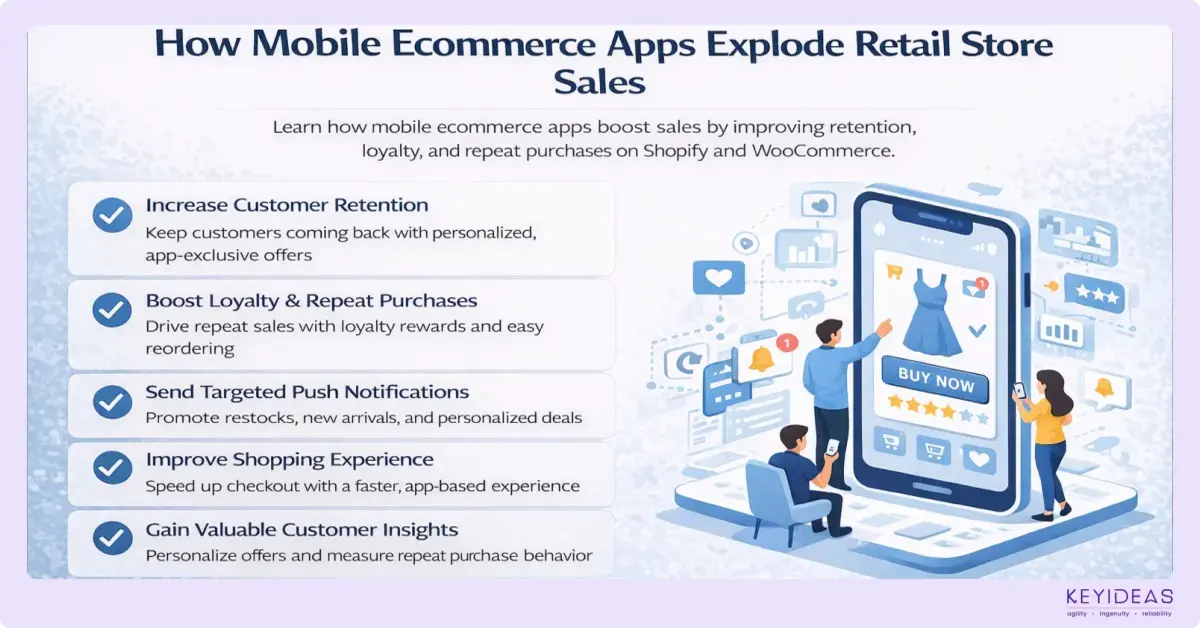
With mobile shopping on the rise, recent mobile ecommerce statistics reveal a major shift in consumer behavior. Over 70% of retail traffic now comes from smartphones, showing how vital mobile-optimized stores have become. These mobile ecommerce statistics also highlight higher conversion rates from apps compared to desktop, proving the value of seamless UX and responsive design. Brands leveraging mobile strategies see increased engagement and revenue. As mobile ecommerce statistics continue to trend upward, investing in mobile-friendly platforms is essential for sustained growth in the digital marketplace.

Mobile applications are reshaping how restaurants engage with customers, offering seamless food ordering, reservations, and personalized deals. By adopting mobile applications, restaurants can streamline operations, enhance user experience, and boost customer loyalty. These solutions also support efficient restaurant ordering systems, allowing faster service and better customer retention. Investing in restaurant app development helps businesses stay ahead in a competitive market. Mobile applications are now a vital part of digital transformation in the food industry. With mobile applications, restaurants can better track customer preferences and deliver tailored promotions.

Choosing the right software outsourcing partner is crucial for project success and long-term collaboration. This blog outlines key factors to consider, from technical expertise and cultural compatibility to communication practices and pricing models. By understanding what sets top software outsourcing services apart, businesses can avoid common pitfalls and build productive partnerships. Learn how to evaluate vendors, define your expectations, and align on project goals to ensure your software outsourcing partner delivers quality, efficiency, and scalability every step of the way. Discover how outsourcing can streamline workflows while boosting your competitive edge.
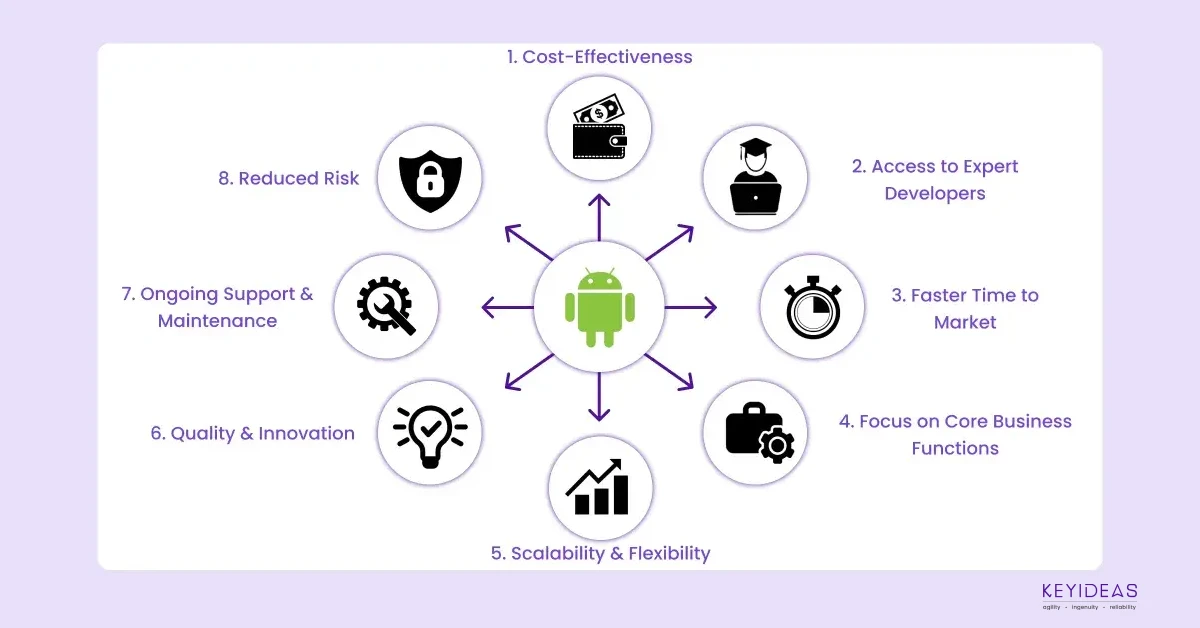
Outsourcing Android app development can be a game-changer for businesses aiming to build cost-effective, high-performance apps without compromising quality. This guide explains the key benefits, challenges, and expert tips for outsourcing, whether you're working with an Android app outsourcing company or looking to hire Android developers directly. Learn how offshore Android development simplifies processes, reduces timelines, and helps scale faster. Discover how smart Android app development services can offer flexibility, innovation, and a competitive edge in the mobile-first world. Outsourcing Android app development is no longer a risk—it's a strategic move for global success.