
The Internet of Things (IoT) is no longer an emerging technology. It is an operational reality. From connected devices and sensors to real time data streams, IoT now plays a critical role in how businesses monitor operations, understand customers, and automate decision making.
What matters today is not what IoT is, but how businesses use IoT data to drive efficiency, visibility, and growth. Without the right digital platforms and integrations, IoT investments often fail to deliver meaningful outcomes.
IoT Has Shifted From Devices to Data
Early IoT conversations focused on connected hardware. Today, the real value lies in:
- Continuous data collection
- Real time monitoring
- Event based automation
- System level visibility
IoT is now less about smart devices and more about connected business intelligence.
What IoT Really Means for Businesses Today
IoT enables businesses to:
- Track assets, inventory, and environments in real time
- Improve operational efficiency through automation
- Reduce downtime with predictive insights
- Make faster, data driven decisions
However, these benefits only materialise when IoT data is connected to the right digital systems.
Real Time Visibility Across Operations
From Static Reports to Live Insights
IoT systems provide businesses with live operational data, allowing teams to:
- Monitor performance as it happens
- Identify issues before they escalate
- Respond faster to changing conditions
This real time visibility is especially valuable in logistics, manufacturing, retail, and infrastructure heavy businesses.
Automation Driven by Connected Data
Turning Signals Into Action
IoT enables automation by triggering actions based on data thresholds or events, such as:
- Inventory alerts
- Equipment maintenance triggers
- Environmental control adjustments
Automation reduces manual effort while improving consistency and reliability.
Better Customer and User Experiences
IoT Beyond Internal Operations
When integrated properly, IoT data can enhance customer facing experiences by:
- Improving delivery accuracy
- Enabling usage based services
- Supporting proactive customer support
The key is connecting IoT insights to customer platforms rather than keeping them siloed.
Data Integration Is Where IoT Succeeds or Fails
IoT Without Integration Has Limited Value
IoT systems generate massive amounts of data, but value is created only when that data flows into:
- Business dashboards
- Analytics platforms
- eCommerce and order systems
- CRM and ERP tools
Disconnected IoT systems often become expensive data collectors with little business impact.
Scalability and Security Are Non Negotiable
IoT Grows Quickly and So Do the Risks
As IoT systems scale, businesses must account for:
- Secure data transmission
- Access control and permissions
- System reliability under load
- Long term maintainability
Security and scalability must be designed into the architecture from the beginning.
IoT as Part of a Broader Digital Platform Strategy
Modern businesses no longer treat IoT as a standalone initiative. Instead, IoT becomes one component of a larger digital ecosystem that includes:
- Web and mobile platforms
- Analytics and reporting layers
- Automation and workflow systems
- Customer facing applications
IoT succeeds when it supports end to end business processes rather than isolated use cases.
How Keyideas Approaches IoT Driven Digital Platforms
At Keyideas, IoT is approached from a platform and integration standpoint rather than a device centric one.
The focus is on helping businesses design digital platforms that can consume and process IoT data, present insights through dashboards and interfaces, and integrate IoT signals into eCommerce, operations, and analytics systems.
This ensures IoT investments translate into measurable business value rather than disconnected infrastructure.
Final Thought: IoT Is a Data Strategy, Not a Hardware Project
The Internet of Things is no longer about connecting devices. It is about connecting data to decisions.
Businesses that succeed with IoT are those that invest in platforms, integrations, and analytics alongside sensors and hardware.
When IoT is treated as part of a broader digital strategy, it becomes a powerful driver of efficiency, insight, and growth.
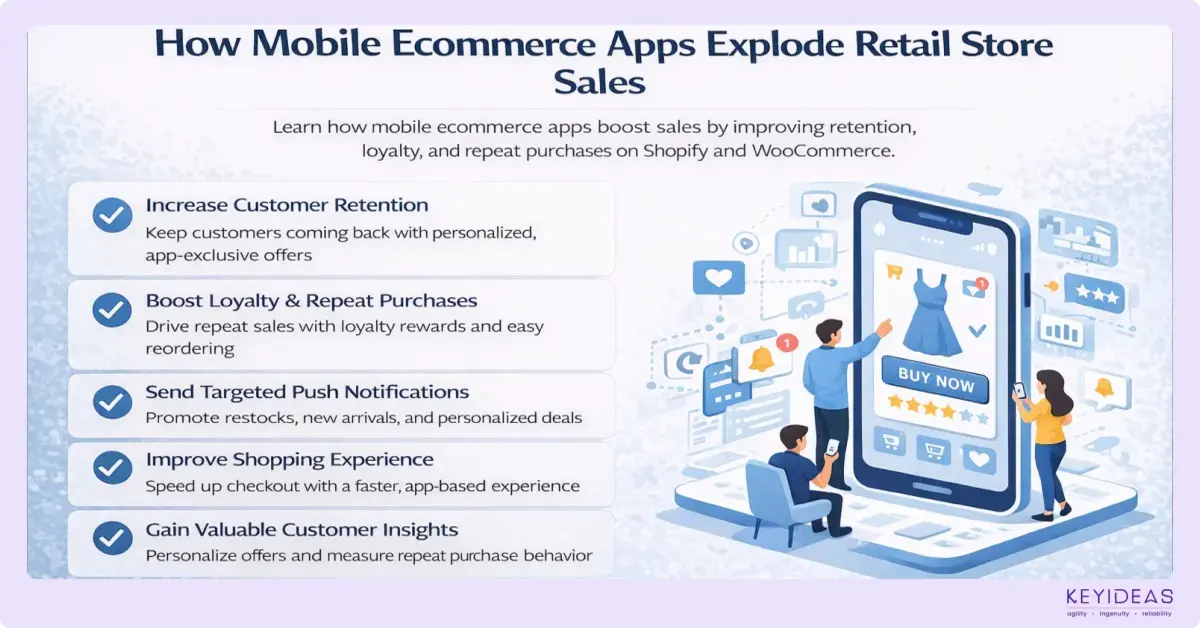
With mobile shopping on the rise, recent mobile ecommerce statistics reveal a major shift in consumer behavior. Over 70% of retail traffic now comes from smartphones, showing how vital mobile-optimized stores have become. These mobile ecommerce statistics also highlight higher conversion rates from apps compared to desktop, proving the value of seamless UX and responsive design. Brands leveraging mobile strategies see increased engagement and revenue. As mobile ecommerce statistics continue to trend upward, investing in mobile-friendly platforms is essential for sustained growth in the digital marketplace.

Mobile applications are reshaping how restaurants engage with customers, offering seamless food ordering, reservations, and personalized deals. By adopting mobile applications, restaurants can streamline operations, enhance user experience, and boost customer loyalty. These solutions also support efficient restaurant ordering systems, allowing faster service and better customer retention. Investing in restaurant app development helps businesses stay ahead in a competitive market. Mobile applications are now a vital part of digital transformation in the food industry. With mobile applications, restaurants can better track customer preferences and deliver tailored promotions.

Discover how iBeacons in Retail and Education are transforming the way businesses and institutions interact with users. In retail, iBeacons empower proximity marketing, enabling personalized promotions and seamless in-store navigation to enhance the shopping experience. In the education sector, iBeacons in Retail and Education bring innovation through classroom automation, offering features like attendance tracking, location-based content delivery, and interactive learning environments. These small yet powerful Bluetooth devices create real-time, data-driven interactions that benefit students. Embrace the future with iBeacon technology that bridges engagement and efficiency.

Choosing the right software outsourcing partner is crucial for project success and long-term collaboration. This blog outlines key factors to consider, from technical expertise and cultural compatibility to communication practices and pricing models. By understanding what sets top software outsourcing services apart, businesses can avoid common pitfalls and build productive partnerships. Learn how to evaluate vendors, define your expectations, and align on project goals to ensure your software outsourcing partner delivers quality, efficiency, and scalability every step of the way. Discover how outsourcing can streamline workflows while boosting your competitive edge.