Mining Technology and Autonomous Operations Services
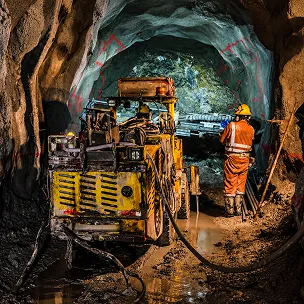
An underground mine has no GPS signal and no clear path for standard wireless through hundreds of feet of rock. We build connectivity that solves that specific problem.
Contact UsAn Overview of Our Mining Technology Services
Below is an overview of the key areas we cover when building technology for mining operations, explained in more detail below.
- AI-Powered Mining Operations
- Autonomous Mining Equipment
- Connected Mining IoT and Real-Time Fleet Monitoring
- Digital Mine Platforms
- Predictive Mining Equipment Maintenance
- AI-Powered Exploration and Geological Analytics
- Digital Twins for Mining Operations
- Smart Mine Control Centers
- AI-Powered Safety and Risk Monitoring
- Connected Supply Chain and Logistics
- Mining Equipment and Parts Management
- Energy and Resource Optimization
- Mining Data Platforms and Operational Analytics
- Digital Sustainability and Traceability

John Devereux
Rangecon
Mining project teams need to assess contractor capabilities, site experience, and service coverage before making contact. Clear service pages and relevant project information can help prospective customers understand our scope and discuss their requirements.

Terry Newell
Mining Maintenance & Fabrication Services
Mining maintenance buyers need to understand workshop capabilities, field services, and operational support. A more structured website can help visitors locate relevant services and contact the team with clearer project requirements.
Benchmarked Against Leading Mining Technology Platforms
We measure every engagement against the fleet coordination, safety monitoring, and traceability standards of the strongest mining operations worldwide today.
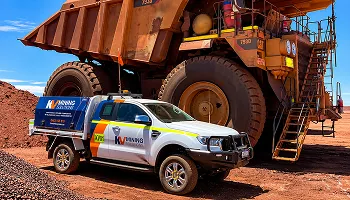
Mining Technology Platforms We Have Delivered
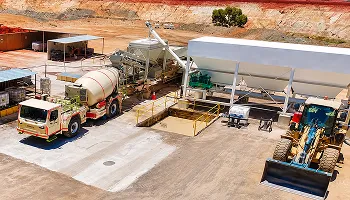
Explore mining technology projects from operations around the world, each one reflecting careful fleet coordination and safety design.


The Mining Platforms and Tools We Use
Mining technology only works when grounded in real expertise across fleet coordination, geological data, and safety tools.
We Build On
We Migrate From
Core Mining Capabilities We Deliver
From AI-powered operations to digital traceability, these fourteen capabilities cover mining technology end to end.
AI-Powered Mining Operations
Ore Grade and Block Model Data Driving Sequencing
Production Planning With Current Data
Not Periodic Reviews That Lag Behind the Working Face
A blast pattern too conservative for a bench’s actual rock hardness wastes explosive and produces oversized fragments that slow the crusher, while a pattern too aggressive for softer rock creates excessive fines that lose value, and getting that balance right depends on the rock hardness actually present at that bench rather than one standard design applied across variable geology. We build AI-powered mining operations tools that recommend blast hole spacing and charge weight calibrated to measured rock hardness at each specific bench, tuning the design to the geology actually present rather than applying one standard pattern across benches with meaningfully different rock characteristics.
Autonomous Mining Equipment
Sequencing Haul Truck Routes Across a Shared Pit
Avoiding Collision, Optimizing Cycle Time
Not a Single Autonomous Vehicle Operating in Isolation
An autonomous haul truck fleet operating across an open pit needs coordination that sequences each truck’s route to avoid collision and optimize loading cycle time, a coordination problem considerably more complex than a single autonomous vehicle operating in isolation. We build autonomous mining equipment coordination tools that sequence haul truck routes across a shared pit to avoid collision and optimize cycle time, managing the fleet-wide coordination complexity that autonomous equipment operating together in a shared, active pit specifically requires.
Connected Mining IoT and Real-Time Fleet Monitoring
Mesh Networking and Underground Positioning
Solving a Connectivity Problem Unique to Underground
Not a Standard Wireless or GPS Approach Built for Surface
An underground mine has no GPS signal and no straightforward path for standard wireless connectivity through hundreds of feet of rock, a connectivity challenge considerably more severe than a remote surface site with at least a clear line of sight to a tower or satellite. We build connected mining IoT and real-time fleet monitoring infrastructure using mesh networking and underground-specific positioning technology, solving the connectivity problem underground mining specifically presents rather than assuming a standard wireless or GPS-based approach built for surface operations will work the same way below ground.
Digital Mine Platforms
The Long-Term Mine Plan Connected to Live Production Data
Adjusting Sequencing Against Real Conditions
Not a Static Plan Disconnected From What’s Encountered
A mine’s long-term extraction plan, pit design, extraction sequence, waste-to-ore ratio targets, needs to stay connected to actual day-to-day production data as mining progresses, not exist as a static plan disconnected from what the operation is actually encountering as extraction proceeds. We build digital mine platforms that keep the long-term mine plan connected to actual production and geological data as mining progresses, letting an operation adjust extraction sequencing against real conditions rather than mining against a static plan that does not reflect what has actually been encountered underground or in the pit.
Predictive Mining Equipment Maintenance
Wear Patterns From Vibration, Dust, and Load Cycling
Calibrated to the Harshest Operating Conditions
Not a Maintenance Interval Built for a Gentler Environment
Mining equipment operates under some of the harshest conditions any industrial equipment faces, constant vibration, abrasive dust, extreme load cycling on haul trucks and drill rigs, conditions that accelerate component wear in ways a maintenance schedule built for equipment operating in a cleaner, steadier industrial environment does not account for. We build predictive mining equipment maintenance that analyzes wear patterns specific to the vibration, dust, and load cycling mining equipment actually experiences, catching a developing issue calibrated to the harsh operating conditions mining equipment faces rather than applying a maintenance interval built for equipment operating in a gentler environment.
AI-Powered Exploration and Geological Analytics
Supporting Ore-Body Block Modeling From Drill Data
A Statistically Grounded Grade Distribution Model
Not Manual Interpolation Between Sample Points Alone
Two drill holes twenty meters apart showing meaningfully different ore grade at the same depth create genuine ambiguity about where the grade boundary between them sits, and a geologist drawing that boundary by eye is making a call that AI-assisted analysis across thousands of sample points in the mine’s historical database can narrow with considerably more statistical confidence than just the nearby handful. We build AI-powered geological analytics that compare a new drill result against the mine’s entire historical sample database to narrow grade boundary uncertainty, supporting a boundary call with pattern evidence from thousands of comparable samples rather than one geologist’s judgment from the nearby points alone.
Digital Twins for Mining Operations
Modeling Pit Design and Slope Stability Changes
Testing Safety and Efficiency Before a Physical Change
Not Discovering Slope Risk After a Costly Modification
Steepening a pit wall angle by even a few degrees lets a mine extract more ore per bench without moving additional waste rock, a meaningful efficiency gain, but push too far past what that rock type and groundwater condition can hold and the wall becomes a slope failure risk, a tradeoff that needs testing against the mine’s actual geotechnical data rather than a generic rule of thumb. We build digital twins for mining operations that model a proposed wall angle against the pit’s own measured geotechnical data, showing planners where the efficiency gain from a steeper angle crosses into genuine failure risk for that particular rock and groundwater condition rather than relying on a generic guideline not calibrated to the site.
Smart Mine Control Centers
Surface and Underground Visibility Unified
The Full Above-and-Below-Ground Picture
Not Two Separate Systems That Each Show Half the Operation
A mine control center needs visibility into both surface operations and underground activity simultaneously, and a system that only aggregates surface equipment status while underground crews and equipment remain visible only through separate, disconnected underground tracking systems leaves a control center working from half the operational picture. We build smart mine control centers that unify surface and underground visibility into one coordinated view, giving control room staff the full above-and-below-ground operational picture a mining operation actually requires rather than two separate systems that each only show half of what is actually happening.
AI-Powered Safety and Risk Monitoring
Ground Movement and Gas Concentration Monitored Continuously
Flagging a Developing Hazard Before It Becomes Acute
Not Relying on Periodic Manual Safety Checks Alone
An underground mine faces safety hazards, ground movement indicating a potential rockfall, gas concentration changes, that develop gradually and are detectable through continuous sensor monitoring well before they become an acute, immediate hazard to crews working in the area. We build AI-powered safety and risk monitoring that analyzes ground movement and gas concentration data continuously, flagging a developing hazard before it becomes acute rather than relying on periodic manual safety checks to catch a condition that sensor monitoring could have flagged considerably earlier.
Connected Supply Chain and Logistics
Extraction Rate Coordinated Against Mill and Transport Capacity
Flagging a Bottleneck Before Stockpiles Accumulate
Not Disconnected Extraction, Processing, and Logistics Planning
A mine extracting ore faster than its processing mill can handle, or faster than outbound rail or truck logistics can move processed material, creates a bottleneck that a mine operating extraction, processing, and logistics as disconnected planning functions will not see coming until stockpiles are already overflowing. We build connected supply chain and logistics tools that coordinate extraction rate against mill processing capacity and outbound transport availability, flagging a bottleneck before stockpiles accumulate rather than discovering a capacity mismatch only after material has nowhere left to go.
Mining Equipment and Parts Management
Replacement Cycles Tracked by Actual Operating Hours
Scheduling Based on Accumulated Wear
Not a Calendar Interval That Ignores How Hard a Unit Has Run
A haul truck tire or a drill bit wearing out is driven far more by actual hours of operation under harsh load than by calendar time, and a parts replacement schedule based on calendar intervals rather than actual accumulated operating hours risks either replacing a part too early or running it dangerously past its actual wear limit. We build mining equipment and parts management tools that track replacement cycles against actual accumulated operating hours rather than calendar time, scheduling replacement based on the wear a specific piece of equipment has actually accumulated rather than a calendar interval that does not reflect how hard that specific unit has actually been run.
Energy and Resource Optimization
Targeting Ventilation Rate and Haul Route Efficiency
The Two Largest Energy Costs a Mine Carries
Not a Generic Dashboard Treating Every Use Equally
Underground ventilation and haul truck fuel together represent two of the largest energy costs a mining operation carries, and a ventilation system running at a fixed rate regardless of actual underground air quality, or a haul fleet routed without regard to fuel-efficient routing, wastes energy that monitoring and optimizing those two specific systems could meaningfully reduce. We build energy and resource optimization tools that specifically target ventilation rate and haul route efficiency, the two largest energy costs a mining operation actually carries, rather than a generic energy dashboard that treats every energy use across the operation as equally significant.
Mining Data Platforms and Operational Analytics
Structuring Block Model and Mill Recovery Data for Comparison
Identifying Where Predicted and Actual Grade Diverge
Not Two Disconnected Data Sets With No Way to Compare
A mine comparing the ore grade predicted by its geological block model against the grade actually recovered at the processing mill needs that reconciliation data structured consistently enough to identify where and why the two numbers diverge, not scattered records that make a systematic grade reconciliation analysis difficult to perform reliably. We build mining data platforms that structure block model predictions and mill recovery data for direct reconciliation comparison, helping operations identify where predicted and actual grade diverge rather than treating prediction and actual recovery as two disconnected data sets with no structured way to compare them.
Digital Sustainability and Traceability
Mineral Chain of Custody From Extraction to Sale
A Verifiable Record Behind a Responsible Sourcing Claim
Not a General Report With No Underlying Traceability Data
A buyer or regulator wanting to confirm a specific shipment of mineral actually originated from a responsibly operated mine needs a chain-of-custody record tracing that material from extraction through processing to sale, not a general sustainability report that makes a claim without the underlying, verifiable traceability data to actually support it. We build digital sustainability and traceability tools that track mineral chain of custody from extraction through processing to final sale, giving operations the verifiable traceability record a responsible sourcing claim actually needs rather than a general report asserting a claim with no underlying chain-of-custody data behind it.
How We Collaborate With Our Clients
We work as an extension of your team, with clear milestones, regular updates, and direct access to your project lead.
Management
Plan tasks, timelines, and project resources efficiently.
Build scalable solutions with clean and secure code.
Monitor performance, fix issues, and manage updates.
Create wireframes, UI designs, and interactive prototypes.
Conduct meetings and discussions to stay aligned.
Frequently Asked Questions About Mining Technology
Questions mining operations and technology leaders most commonly ask before choosing Keyideas for a project.
Have a question or need support? Our team is here to help and will get back to you within one business day.
- 100% confidential
- NDA available
- Same-day response